Batch machining of QT500, QT600 and QT700 ductile iron often requires a practical balance between surface quality, dimensional stability and production rhythm. For continuous turning of automotive and general machinery components, CBN insert selection should be based on the machining objective, cutting continuity, blank condition and the required level of tool-life consistency.
This guide from UHD (Henan UHD Ultrahard Tools Co., Ltd) provides a structured starting point for high-speed finishing, semi-finishing, roughing, automated continuous machining and face turning instead of grinding. It applies primarily to QT500/QT600/QT700 in the HB180–280 range and also covers selected finish-machining conditions after hardening at HRC45–55.
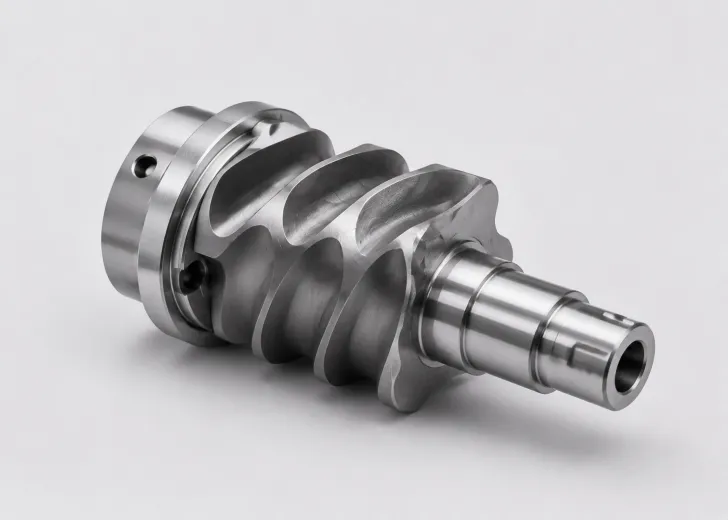
Ductile iron parts such as crankshaft journals, camshafts, wheel hubs, flywheels, gear faces, differential housings and bearing bores are commonly machined on CNC lathes, turning centers and automated production lines. In these applications, the key challenge is usually not whether the material can be cut, but whether the process remains stable through a planned production cycle.
For ductile iron machining, a stable process begins with matching the CBN insert structure to the actual cutting condition—not simply selecting the highest available cutting speed.
Use the following sequence to narrow the insert choice before setting the final machining parameters:
The ranges below are practical starting windows for ductile iron turning. Final settings should be adjusted according to machine rigidity, workholding, tool overhang, coolant strategy, hardness variation, allowance distribution and casting condition.
| Machining Condition | Typical Parts / Features | Recommended UHD Series and Grade | Vc (m/min) |
f (mm/rev) |
ap (mm) |
|---|---|---|---|---|---|
| High-speed continuous finishing | Crankshaft journals, camshafts, wheel hubs, precision bores | Coated CBN Insert Series → UPN202 | 180–350 | 0.06–0.15 | 0.1–0.3 |
| Stable semi-finishing / finishing | Flywheels, gear faces, differential housings | Composite Brazed CBN Insert Series → UPN201 | 150–300 | 0.08–0.20 | 0.2–0.8 |
| Roughing / larger allowance | Ductile iron blanks, larger cast components | Integral Brazed CBN Insert Series → USN100 | 120–250 | 0.12–0.30 | 0.5–2.0 |
| Automated, high-rhythm continuous finishing | High-volume continuous turning operations | Solid CBN Insert Series → UBN S2 | 200–400 | 0.10–0.25 | 0.2–0.6 |
| High-speed face turning instead of grinding | Flywheel faces, large flat surfaces | Full Face CBN Insert Series → BN91 | 450–900 | 0.08–0.20 | 0.2–0.5 |
For high-speed continuous finishing, Coated CBN Insert UPN202 is the preferred starting option. The aim is to maintain controlled flank wear and reduce the likelihood that micro-chipping affects surface finish. If fine vibration marks appear, check toolholder rigidity and overhang before making small adjustments to feed or effective edge geometry.
Composite Brazed CBN Insert UPN201 is suited to stable, continuous machining where a balanced cost-performance approach is required. When hardness varies or locally hardened areas are present, reducing cutting speed or depth of cut can help keep wear progression under control.
Integral Brazed CBN Insert USN100 is intended as a starting choice for roughing conditions with larger allowance, casting skin, sand holes or light interruption. Secure clamping, sufficient machine power and reasonable stock distribution are important. Where the allowance is uneven, staged stock removal may be more stable than applying an excessive depth of cut in one pass.
Solid CBN Insert UBN S2 is suitable for continuous finishing operations where tool-life consistency is especially important. In automated lines, a planned replacement strategy based on parts produced, elapsed machining time or defined wear criteria is generally more reliable than attempting to use every insert to its maximum possible limit.
Full Face CBN Insert BN91 is designed for high-speed continuous face turning in batch finishing applications. Because cutting speed changes from the outside diameter toward the center, program settings should be evaluated at the critical working diameter. If wear or heat concentration develops at the outer diameter, zoned programming or a controlled maximum surface speed may support more consistent results.
UHD supports CBN cutting tools and customized machining solutions for batch production environments. When evaluating a ductile iron turning application, sharing the material condition, part feature, machining allowance, current insert performance and machine setup helps establish a more relevant insert structure and trial-cutting starting point.


Tell us your workpiece, quantity, and tooling requirement. Our team will reply with a practical solution.