CBN Insert Solutions for HRC58–64 Aerospace Engine Shaft Hard Turning
Henan UHD Ultrahard Tools Co., Ltd
2026-08-14
Solution
UHD provides CBN insert selection guidance for hard turning aerospace engine main shafts and transmission shafts in HRC58–64 steels, covering interrupted roughing, dry finish turning, high-precision journals, seal surfaces, and grooving.

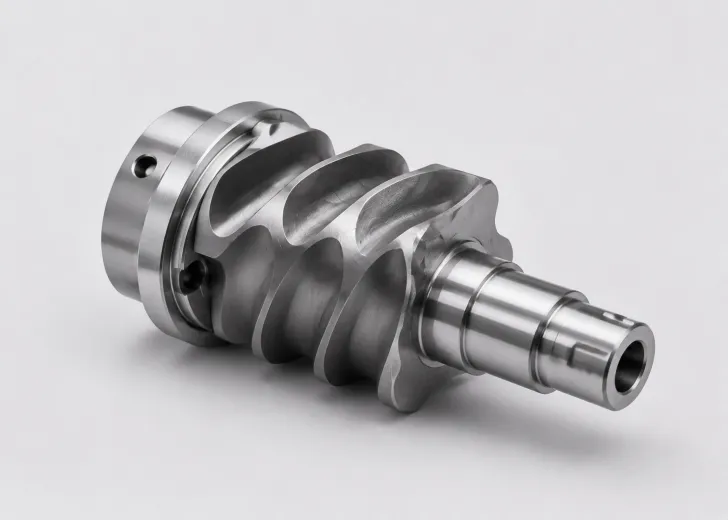
Aerospace engine main shafts and transmission shafts require stable machining across demanding hardened-steel conditions. For components made from HRC58–64 martensitic heat-resistant steel, carburized and quenched steel, or GCr15, hard turning often involves precision journals, seal surfaces, flanges, relief grooves, and radii within the same process route.
UHD, the brand of Henan UHD Ultrahard Tools Co., Ltd, provides process-based CBN insert selection for these applications. The approach separates roughing, finish turning, high-finish passes, and grooving so that insert structure and cutting priorities are matched to the actual machining task rather than relying on one general-purpose insert.
Why HRC58–64 Aerospace Shaft Hard Turning Requires a Process-Based CBN Strategy
High-reliability rotating parts place simultaneous demands on dimensional consistency, surface condition, roundness, and thermal control. During hard turning, transitions at steps, flanges, and radii can create interrupted cutting loads. Dry finishing may concentrate heat at the cutting edge, while seal areas and journals need repeatable surface quality. Relief grooves and seal ring grooves add further requirements for profile accuracy, chip control, and vibration management.
Interrupted Cutting Loads
Flanges, shoulders, and radius transitions can cause load variation that increases the risk of edge chipping and notch wear.
Thermal Influence on Accuracy
In dry hard turning, heat-related edge wear can contribute to dimensional drift and changing surface results.
Profile-Sensitive Features
Journals, sealing locations, relief grooves, and ring grooves need controlled geometry and stable repeatability.
CBN Insert Selection by Machining Stage
The core selection principle is straightforward: roughing prioritizes impact resistance, finish turning prioritizes thermal stability and dimensional control, and dedicated profile operations prioritize feature accuracy. This staged approach helps reduce the uncertainty created when a single insert is expected to perform every operation.
| Machining Stage |
Recommended UHD CBN Series |
Typical Shaft Features |
Primary Selection Priority |
| Roughing / semi-roughing |
Integral Brazed CBN Insert Series |
Rough journals, flanges, and radius areas |
Impact resistance and stable stock removal |
| Finish turning |
Coated CBN Insert |
Journals and seal surfaces under dry hard-turning conditions |
Thermal wear control, dimensional stability, and surface consistency |
| High-finish final pass |
Solid CBN Insert Series |
High-precision journals and critical sealing areas |
Edge consistency and controlled final surface quality |
| Grooving / profile forming |
CBN Grooving Insert Series |
Relief grooves and seal ring grooves |
Profile repeatability, groove-bottom quality, and vibration control |
Solution Modules for Precision Shaft Features
1. Impact-Resistant Roughing for Flanges, Steps, and Rough Journals
Where interrupted cuts and variable stock conditions are present, UHD Integral Brazed CBN Inserts are intended for roughing and semi-roughing priorities. Their role is to support stable material removal where edge impact resistance is more important than the final surface requirement.
Selection focus: resistance to chipping and notch wear, stable edge performance, and reliable rough stock removal.
2. Dry Finish Turning for Journals and Seal Surfaces
High-speed or dry finish turning can accelerate edge wear through concentrated cutting heat. UHD Coated CBN Inserts are suited to finish-turning stages where thermal stability, wear resistance, dimensional repeatability, and surface consistency are the key considerations.
Selection focus: controlled heat-related wear and a more stable finishing process for precision shaft surfaces.
3. High-Finish Final Passes for Critical Rotating Surfaces
Final machining of precision journals and sealing locations may require closer control of surface condition and geometric consistency. The UHD Solid CBN Insert Series can be selected for final finishing or smoothing passes where a stable cutting edge supports controlled micro-wear behavior.
Selection focus: high-finish surface requirements and consistent final-pass control for critical shaft features.
4. Dedicated Grooving for Relief and Seal Ring Profiles
Relief grooves and seal ring grooves are sensitive to contour accuracy, groove-bottom quality, chip accumulation, and vibration. UHD CBN Grooving Inserts provide a dedicated option for precision groove forming rather than forcing a general turning insert to perform a profile-specific operation.
Selection focus: stable groove geometry, reduced risk of surface tearing, and improved profile repeatability.
Process Considerations Before Final Insert Selection
CBN insert selection should be assessed together with the actual workpiece and machine condition. For aerospace shaft hard turning, the following information helps define a more suitable insert configuration:
- Workpiece material and verified hardness: including whether the material is martensitic heat-resistant steel, carburized and quenched steel, GCr15, or another hardened grade.
- Operation type: continuous or interrupted cutting; roughing, semi-finishing, finishing, or grooving.
- Feature geometry: journal diameter, flange transitions, radii, groove profile, and access restrictions.
- Quality requirement: dimensional tolerance, surface condition, roundness, and feature-specific requirements for sealing or rotating functions.
- Machine and setup stability: clamping rigidity, spindle condition, toolholder arrangement, and dry or coolant-assisted machining conditions.
Common Questions About CBN Inserts for HRC58–64 Shaft Hard Turning
Why should roughing and finishing use different CBN insert types?
Roughing is more exposed to impact loads and requires stronger resistance to chipping. Finishing places more emphasis on thermal stability, dimensional consistency, and surface quality. Separating the selection by machining stage helps align insert behavior with each priority.
What commonly affects seal-surface consistency during hard finish turning?
Heat-related edge wear, unstable machining conditions, and unsuitable insert selection can contribute to variation in dimensions and surface condition. A coated CBN insert is a relevant option when dry finishing and thermal stability are important considerations.
Why use a dedicated CBN grooving insert for relief grooves?
Groove operations have specific demands for contour control, chip evacuation, groove-bottom quality, and vibration resistance. A dedicated grooving insert is better aligned with these profile-sensitive conditions than a general turning insert.
Technical Collaboration for Aerospace Shaft Hard Turning
UHD supports B2B customers with CBN insert selection, non-standard tool development, forming-tool configurations, and application-oriented process guidance for hardened-steel turning. The company combines CBN material development, digital manufacturing, precision optical inspection, and tool-edge/process optimization capabilities to support consistent production requirements.
For main shafts and transmission shafts with special geometry or challenging operating conditions, a practical evaluation begins with the drawing, material condition, hardness range, machining allowance, machine setup, and required feature quality. This enables the CBN insert solution to be aligned with the specific roughing, finishing, and grooving sequence.