Home>Solution>Process-Matched CBN Solution for Precision Machining of Hardened Wind Gears
Process-Matched CBN Solution for Precision Machining of Hardened Wind Gears
Improve wind gear machining stability, bore accuracy and cycle efficiency with the process-matched CBN tooling solution for hardened, interrupted and precision cutting.
CBN Tooling for HRC 60–64 Wind Gear Machining
Workpiece and Machining Scope
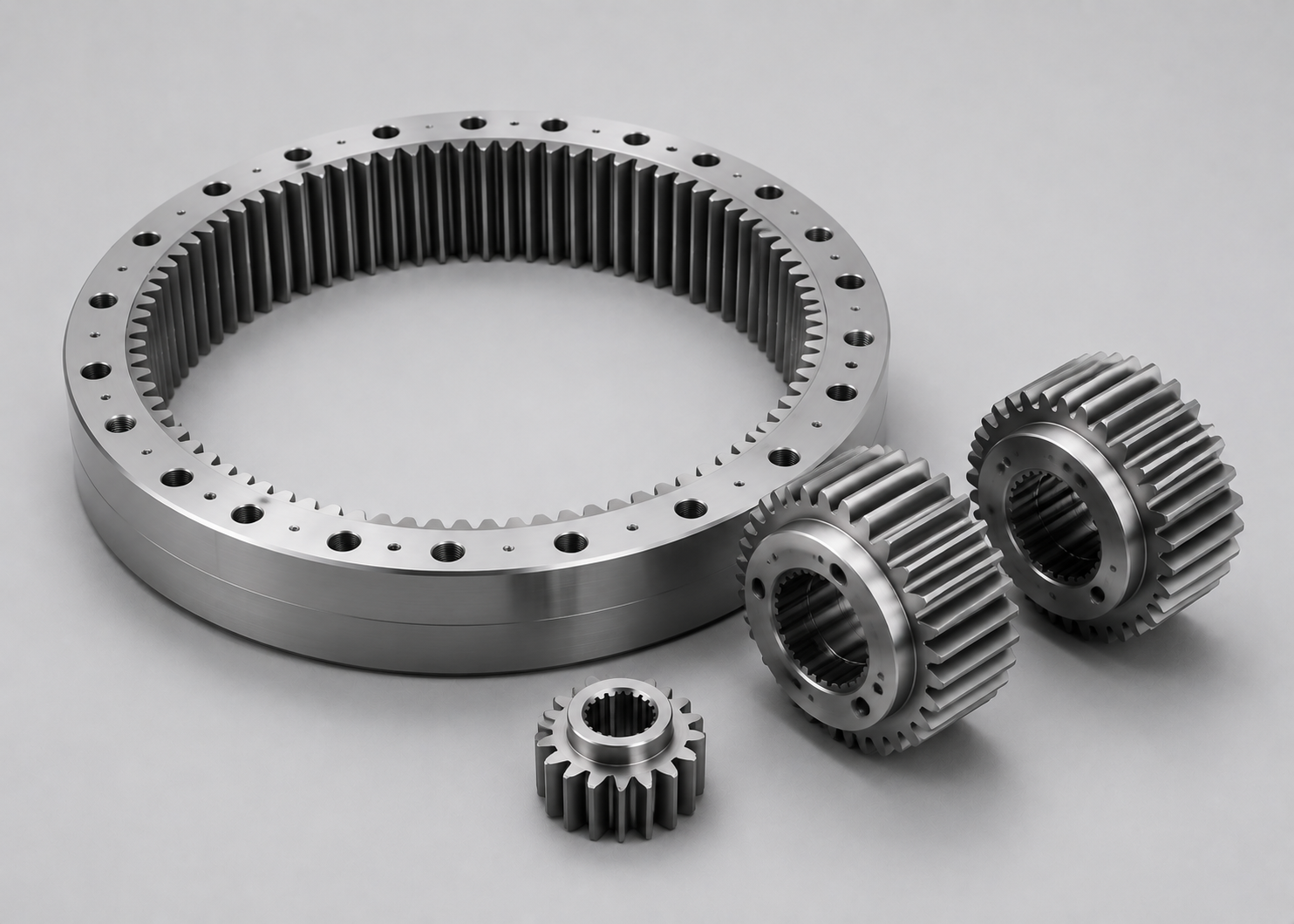
Typical parts
Sun gears, planetary gears and internal ring gears
Materials
18CrNiMo7-6 and 20CrMnTi
Heat treatment
Carburized and hardened to HRC 60–64
Machining areas
Large end faces, precision bores, locating shoulders, tooth-root relief grooves and annular grooves
Process-Matched Solution Logic
Hard turning at HRC 60–64 combines abrasive wear, thermal load and mechanical impact. A single insert type cannot reliably optimize every operation. The solution therefore separates the process by cutting condition and assigns each operation a CBN structure suited to its primary failure mode.
RoughingPrioritize impact resistance and predictable material removal.Precision boringPrioritize dimensional consistency and bore surface quality.Continuous turningBalance stable tool life, efficiency and surface uniformity.Groove formingControl groove width, profile, corner radius and chip flow.
Recommended CBN Insert Configuration
Hover, touch or focus on an insert series to view its process role and corresponding image.
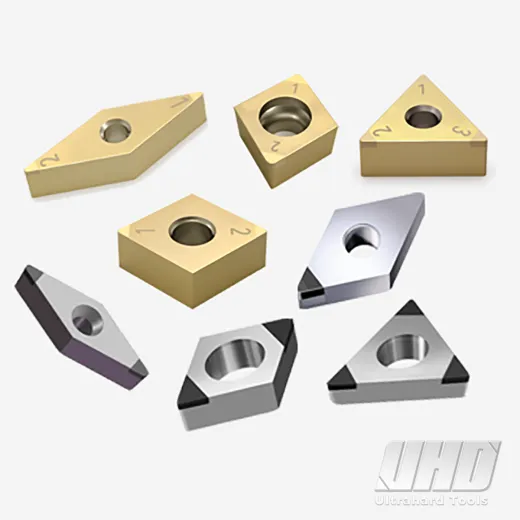
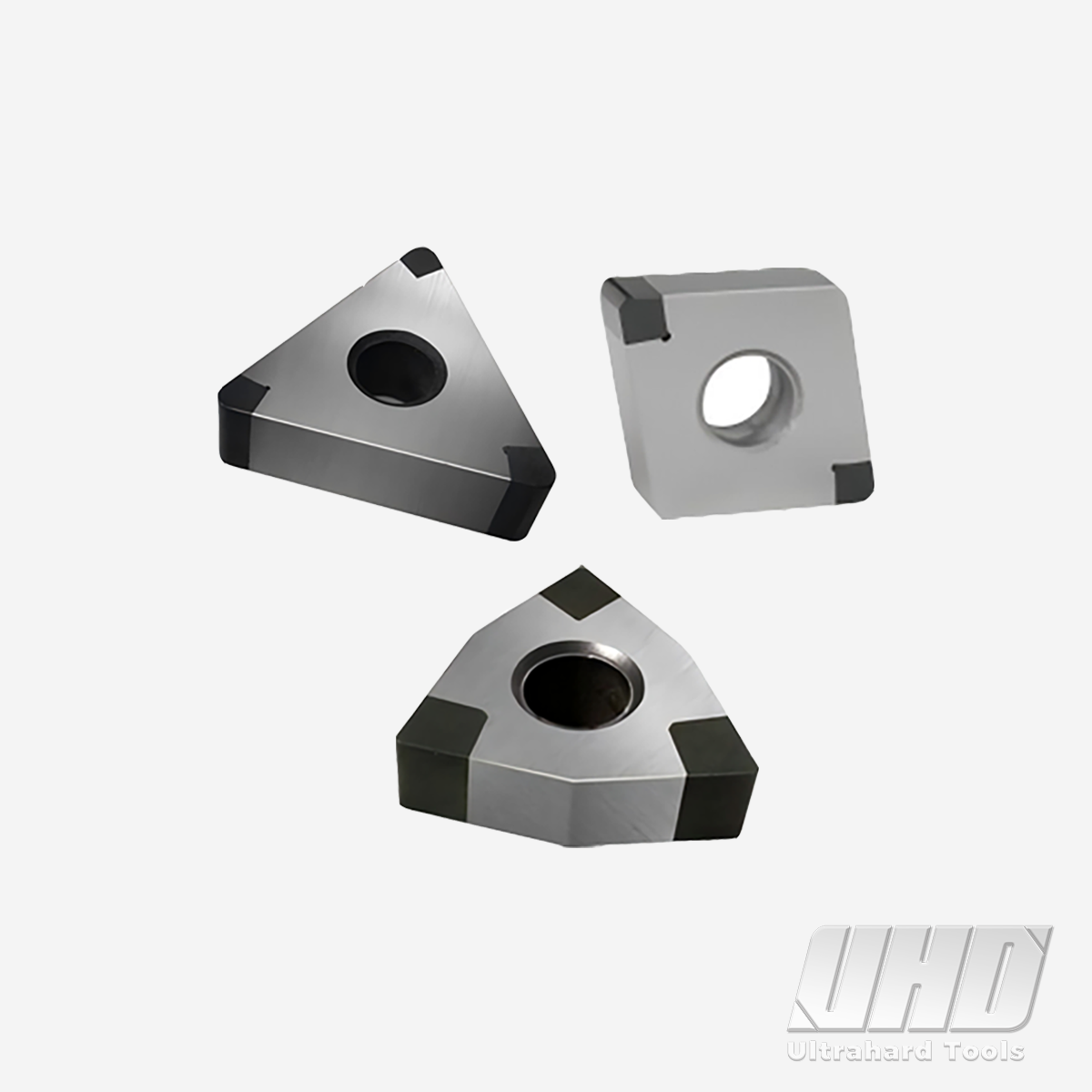
Integral Brazed CBN Insert Series
For interrupted roughing: suited to large end-face rough turning and interrupted tooth-root machining where impact resistance and reduced chipping risk are the main priorities.
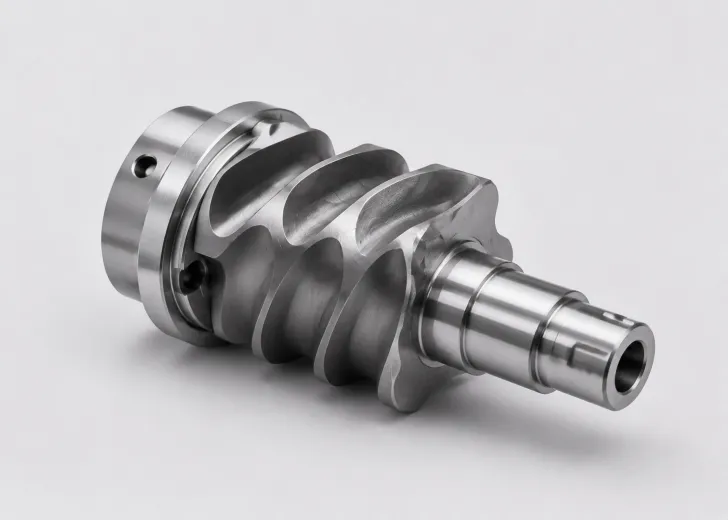
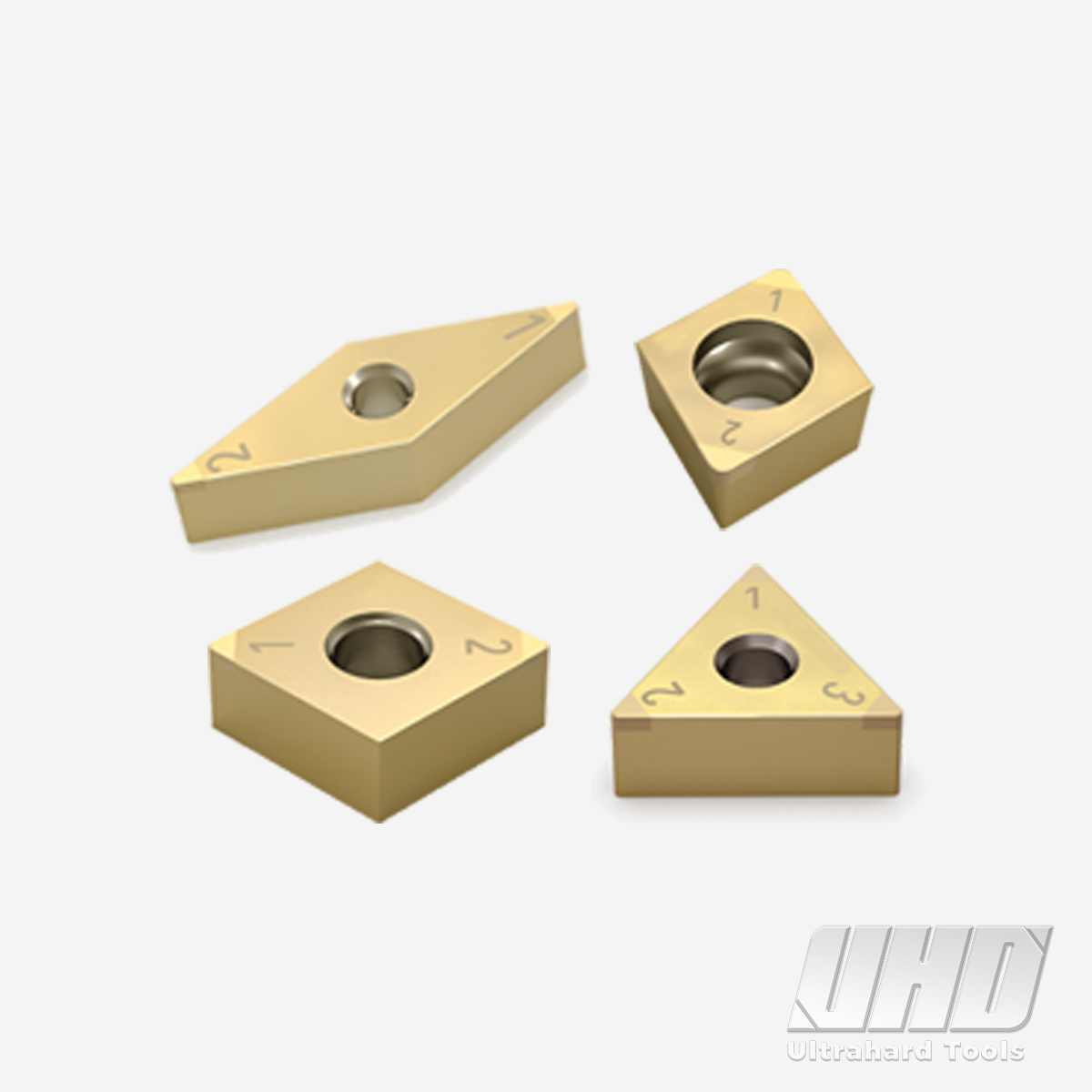
Coated CBN Insert
For precision boring: supports stable bore dimensions, roundness and surface quality in bearing and mating-feature finishing operations.
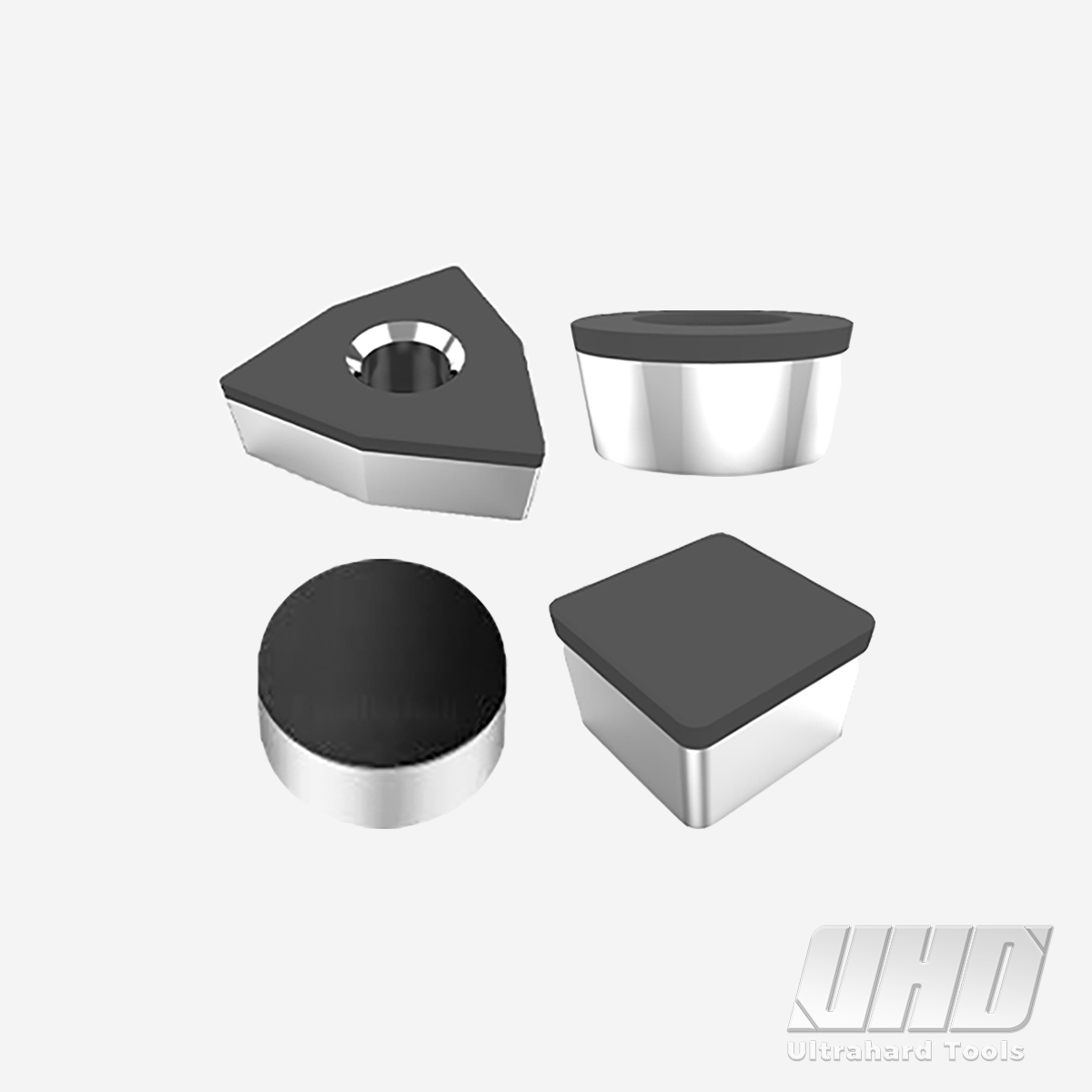
Full Face CBN Insert Series
For continuous face turning: intended for large internal-ring-gear faces where cycle efficiency, stable wear and consistent surface texture are required.
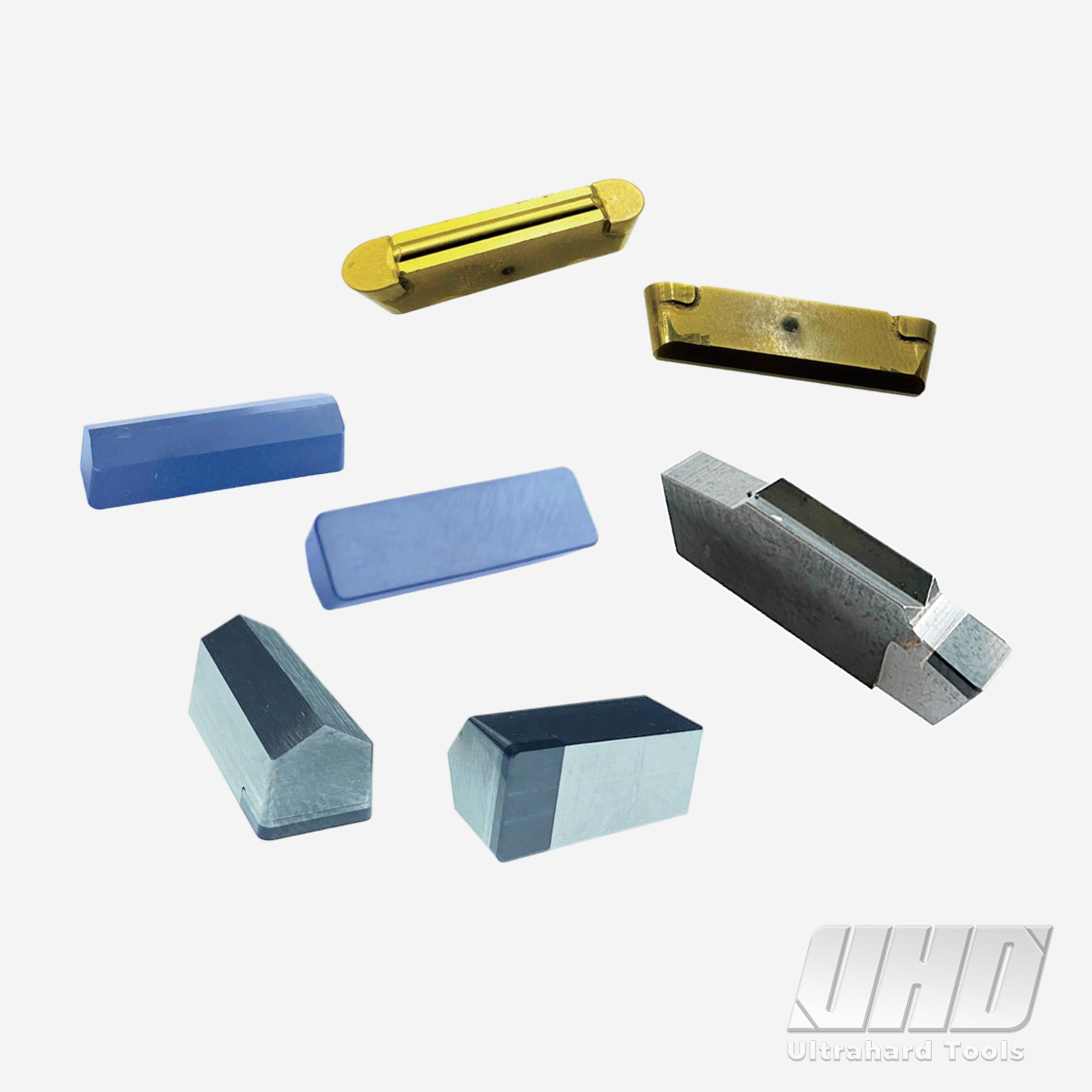
CBN Grooving Insert Series
For relief and annular grooves: dedicated geometry helps control groove width, bottom radius and sidewall form while limiting burrs and repeated correction.
Implementation Inputs and Production Value
Required process inputs
Material, hardness and carburized-layer condition
Continuous or interrupted cutting characteristics
Stock distribution, clamping rigidity and machine stability
Bore, face and groove tolerance requirements
Expected operational value
More predictable tool life in interrupted cutting
Improved bore and batch dimensional consistency
More stable cycle times for large-face machining
Lower rework, insert-change and unplanned downtime exposure
The process framework can also support non-standard insert geometry, technical guidance, regrinding or refurbishment, and continued optimization for batch production and cross-border delivery.