


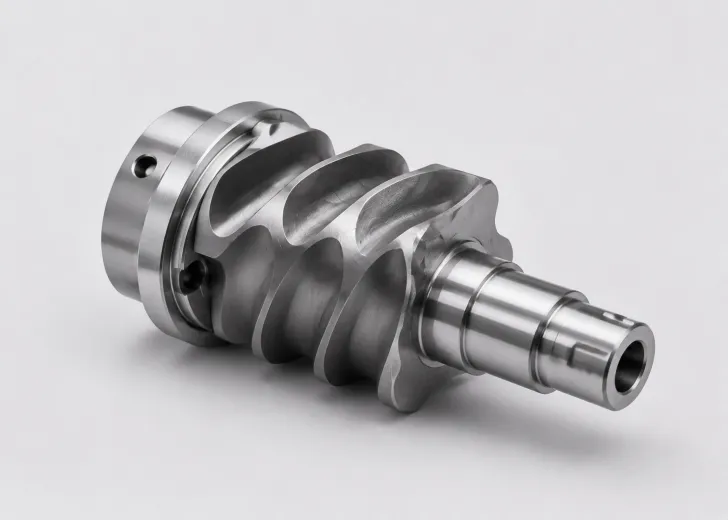
UHD Precision Turning Solution
- CBN Insert Solution
- Hardened 42CrMo Turning
- Generator Shaft Precision Turning
- CBN Grooving Insert
- UHD
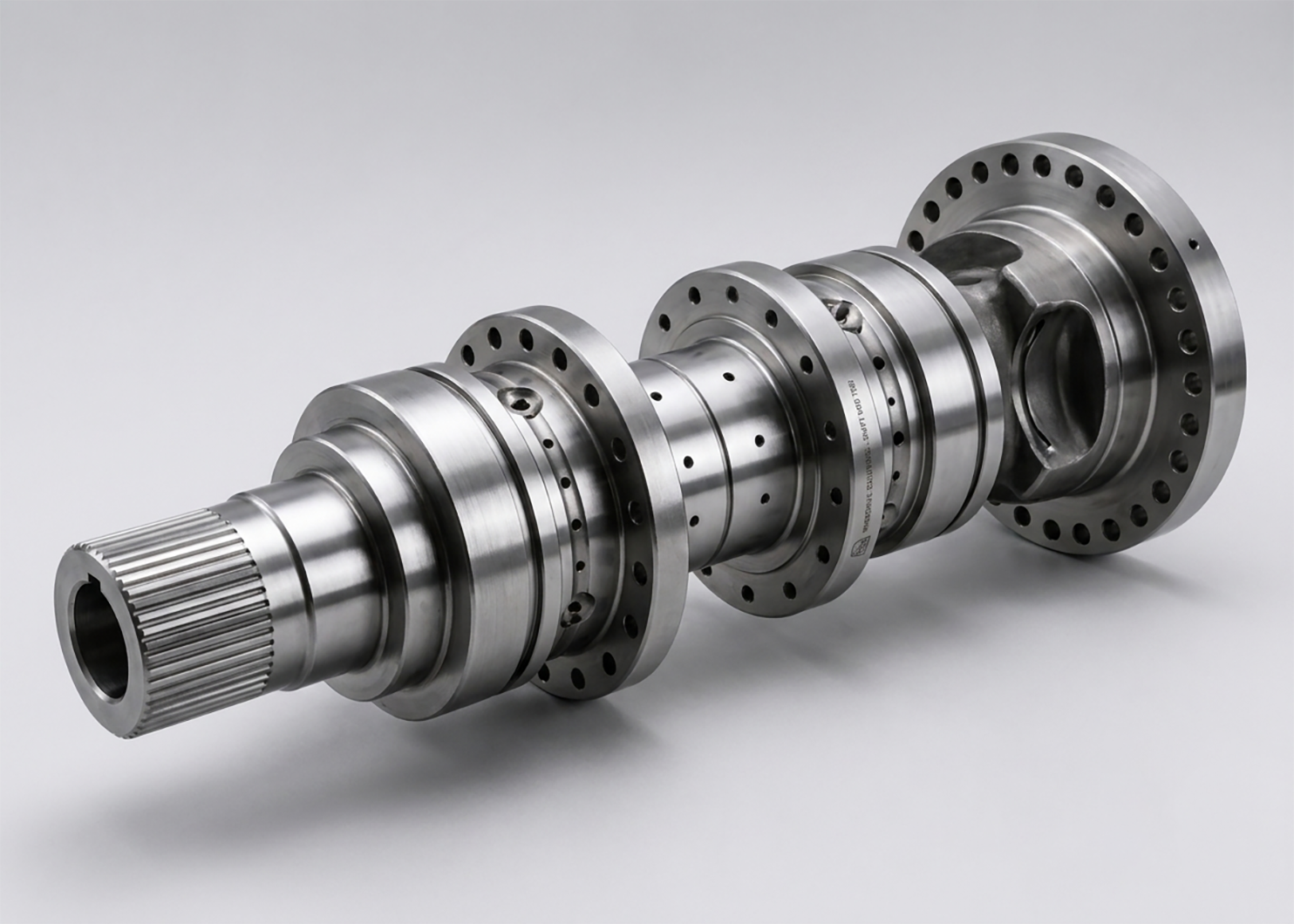
Typical Workpiece: Hardened Generator Shaft
Generator shafts are critical long-shaft components with journals, flange faces and keyways. After quenching, 42CrMo at HRC55–62 creates a hard-turning environment where edge integrity, wear resistance and process stability directly affect dimensional consistency.
Why a Process-Based CBN Insert Combination Is Required
A single insert rarely performs equally well across high-load roughing, high-consistency finishing, long-duration continuous turning and grooving. UHD defines the machining task by cutting load and geometry, then assigns the CBN insert type to the specific operation rather than relying on one general-purpose tool.
Recommended CBN Insert Configuration
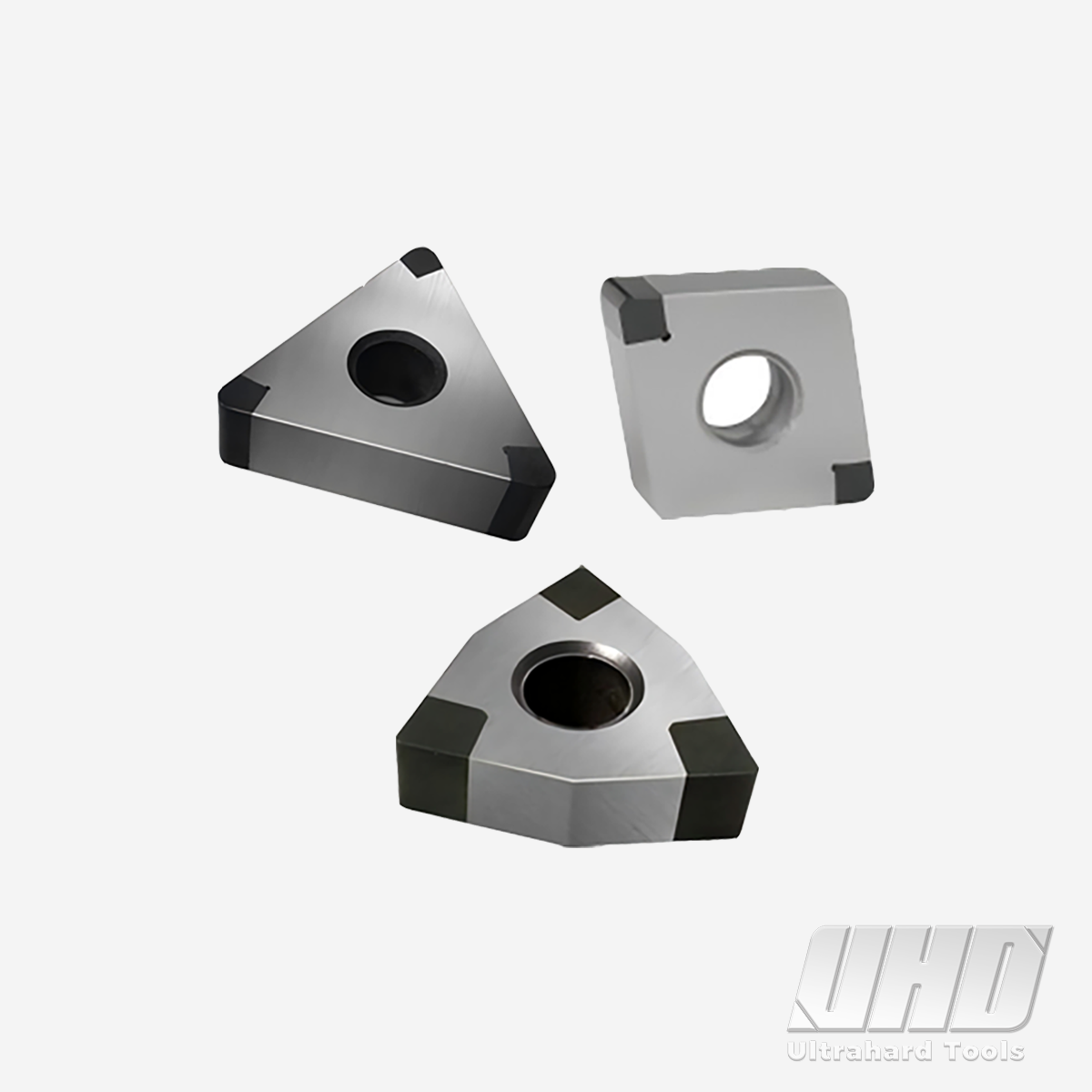
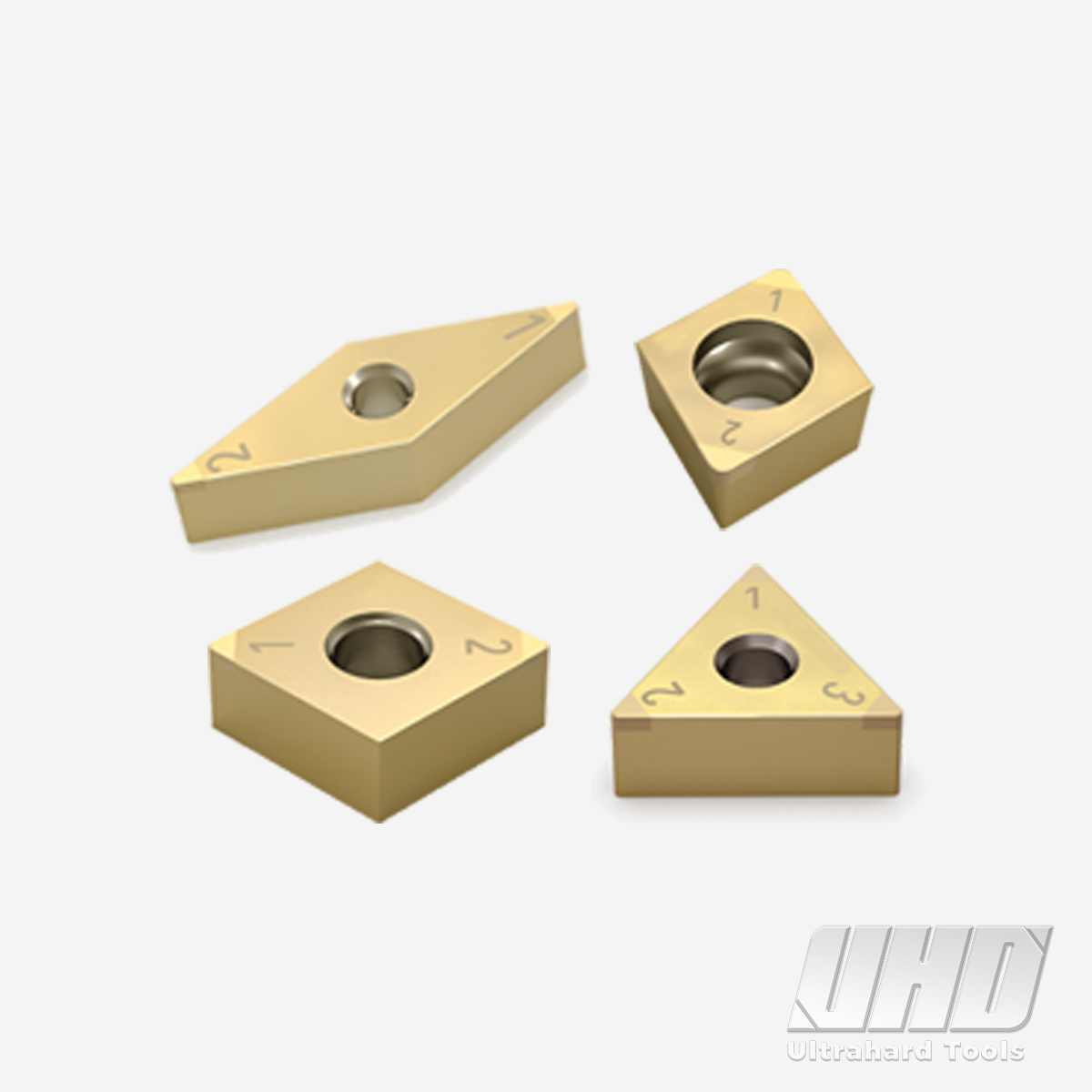
Hover over a recommended insert on desktop to view its application role and corresponding product image. On mobile, all application details remain visible for easy review.
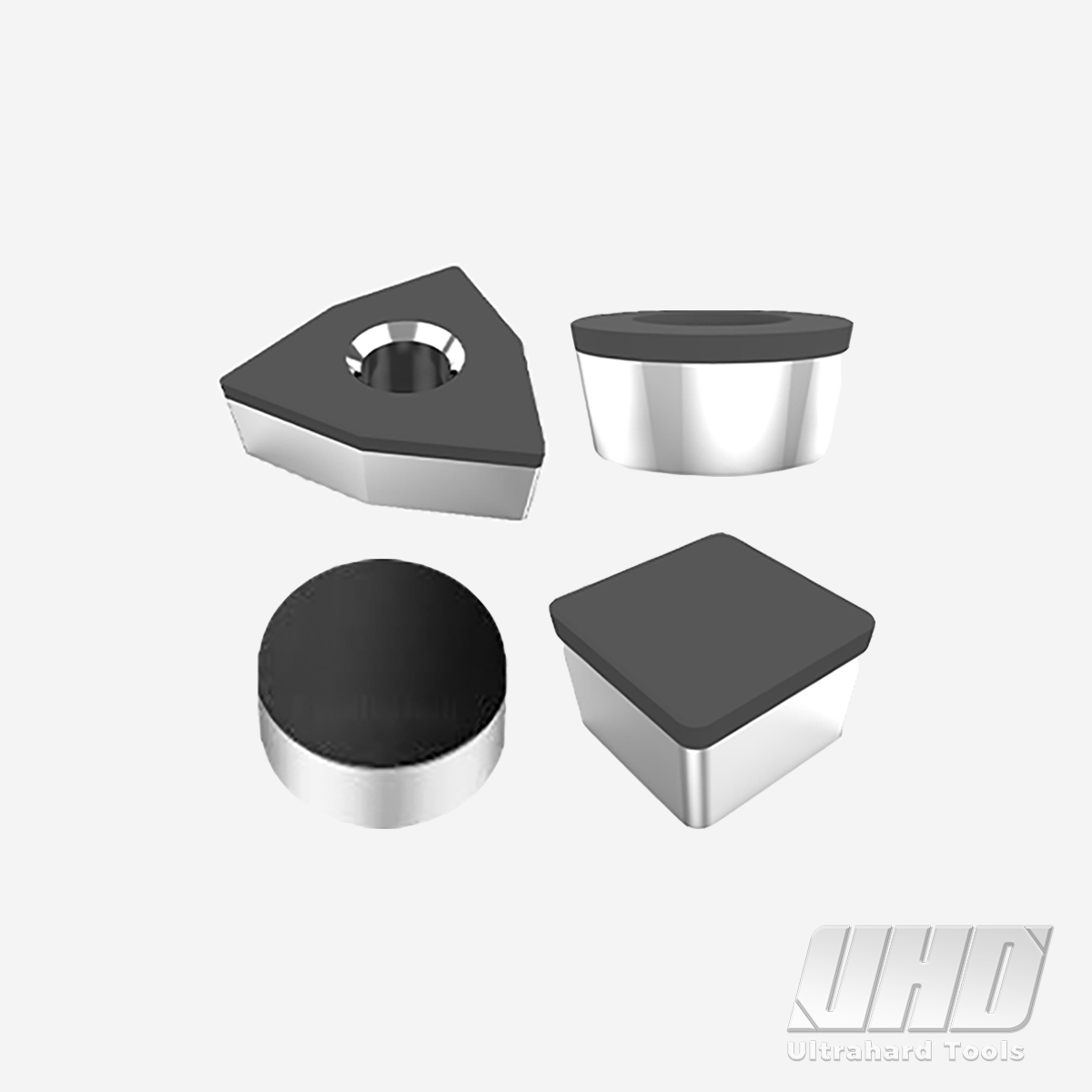
Primary use: flange and long-shaft roughing. The integral brazed structure is suited to higher cutting load and changing impact conditions, helping stabilize large-allowance removal and reduce abnormal edge chipping risk.
Primary use: high-speed journal finishing. Applied where surface finish, roundness and batch dimensional consistency are central requirements under stable cutting conditions.
Primary use: continuous outer-diameter turning. Designed for long-duration continuous cutting where predictable tool life helps reduce tool-change interruptions and process variation.
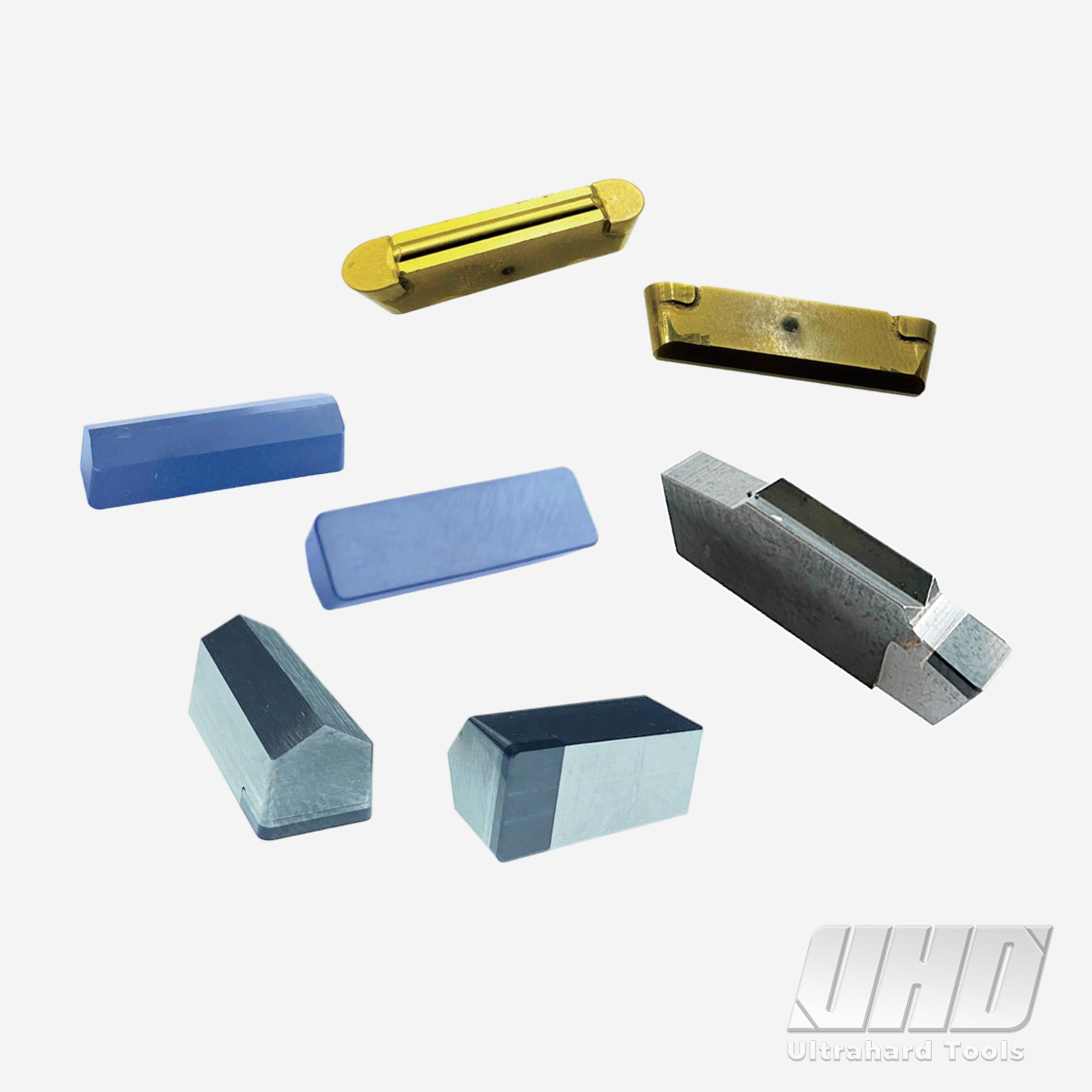
Primary use: keyway and precision grooving. A dedicated grooving geometry supports more controlled groove width, depth and bottom quality in hardened-material cutting.
Expected Manufacturing Value
Clearer Process Control
Separating roughing, finishing, continuous turning and grooving makes insert selection, parameter management and spare-tool planning easier to standardize.
More Stable Output
Matching insert structure to cutting load and workpiece geometry helps reduce uncertainty associated with chipping, accelerated wear and surface variation.
Lower Total Tooling Cost
Better tool-life management can reduce avoidable downtime, rework exposure and unnecessary use of finishing inserts in roughing operations.
UHD application approach: For special machines or demanding conditions, insert geometry, material form and edge preparation can be adapted around machine power, clamping method, interrupted-cut severity, target finish and production rhythm. UHD also supports tooling regrinding, refurbishment and machining parameter guidance as part of a lifecycle-oriented service model.