



Powder Metallurgy Finishing and Interrupted Cutting: CBN Insert Selection and Parameters
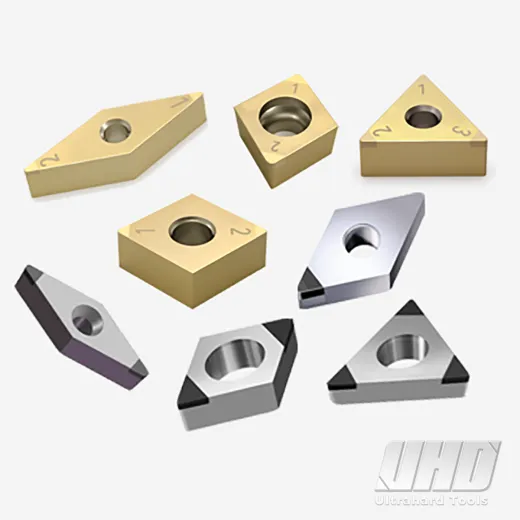
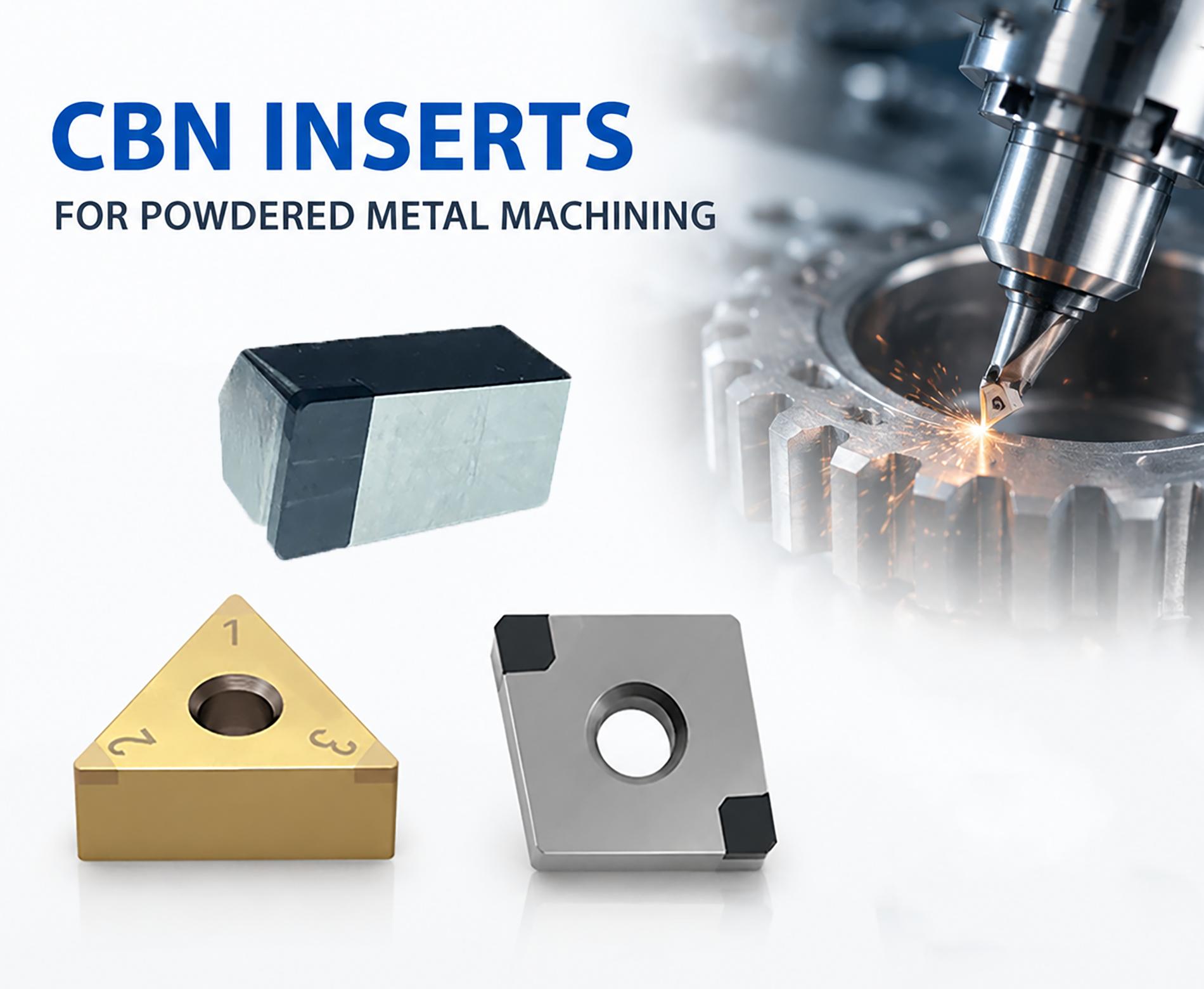
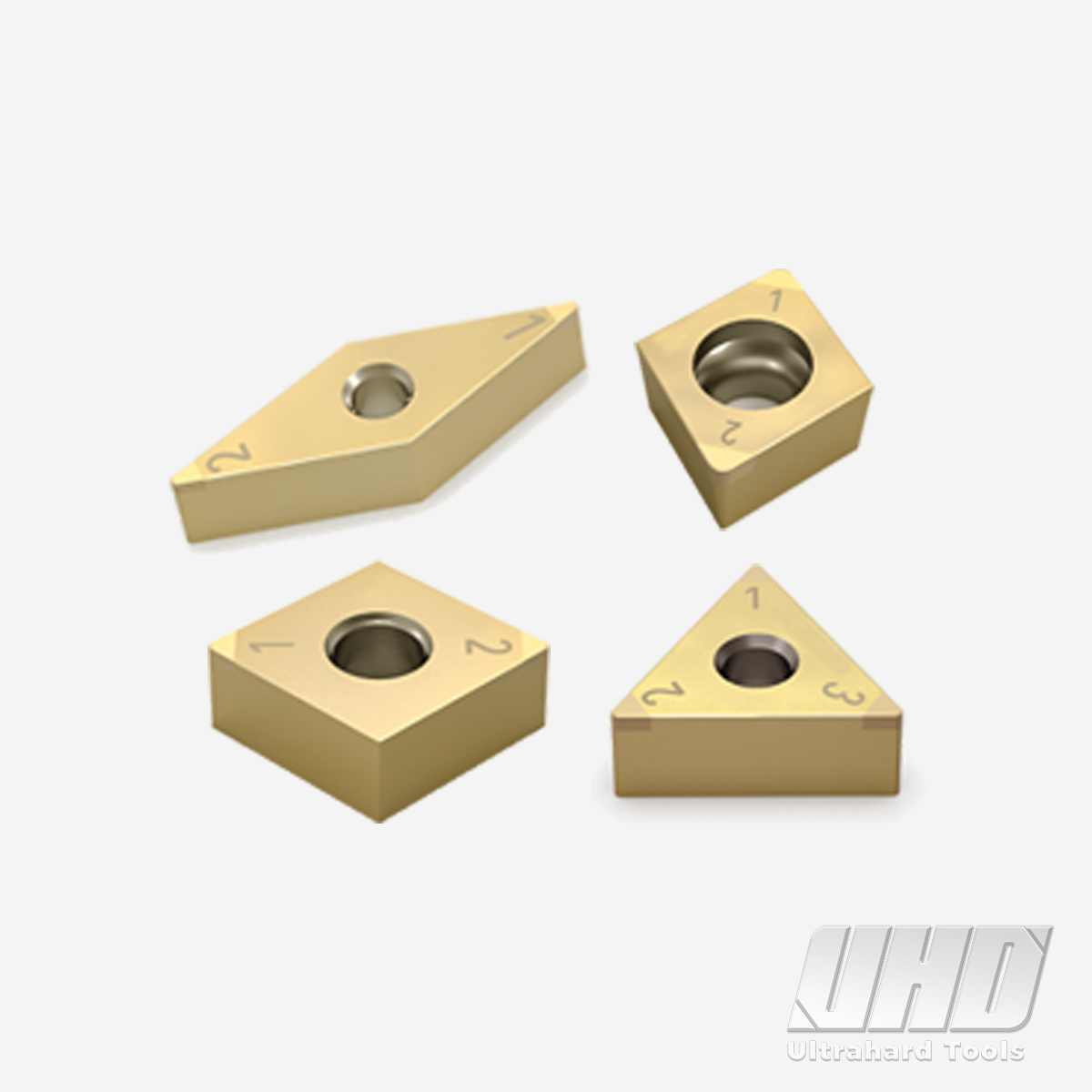
UHD provides CBN insert selection and starting parameter guidance for finishing, interrupted turning, grooving, and profiling of iron-based powder metallurgy parts in sintered HRC35–50 and heat-treated HRC55+ conditions. Match UPN202 coated CBN inserts, USN100 solid-brazed CBN inserts, or CBN grooving inserts to improve process stability, dimensional consistency, and surface finish control in batch production.
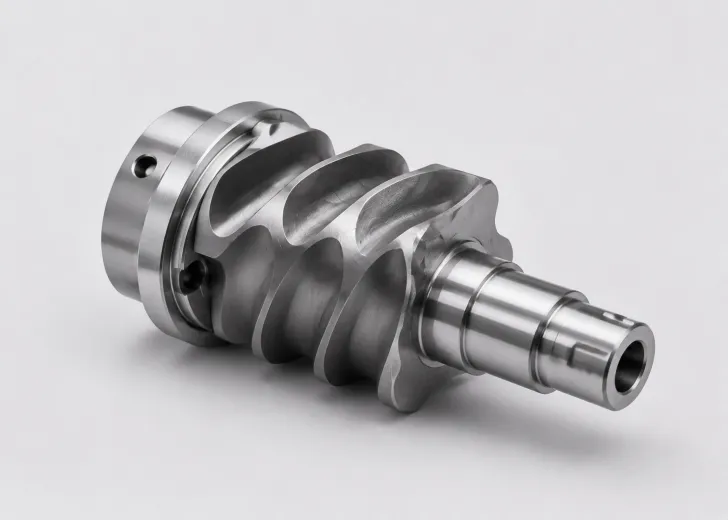
Iron-based powder metallurgy parts, including valve seat rings, synchronizer hubs and connecting rods, can appear easy to cut but often present unstable machining conditions. Hard particles, non-uniform sintered density and interrupted features such as teeth, keyways, hole edges and shoulders may accelerate wear, cause edge chipping and affect dimensional consistency.
For batch production, the objective is not simply to machine the part, but to establish a repeatable process for tool life, surface finish and size control. UHD matches the CBN insert series to the actual cutting condition: wear resistance for continuous finishing, edge strength for interrupted cutting, and reliable groove-forming capability for precision grooving.
Applicable materials: iron-based sintered powder metallurgy in HRC35–50 as-sintered condition and heat-treated parts at HRC55+.
CBN Insert Selection for Powder Metallurgy Parts
| Material & Hardness | Typical Workpiece | Cutting Condition | Recommended Insert Series / Grade | Vc (m/min) | f (mm/rev) | ap (mm) | Selection Notes |
|---|---|---|---|---|---|---|---|
| Iron-based powder metallurgy HRC35–50 as-sintered; HRC55+ heat-treated |
Valve seat rings, synchronizer hubs, connecting rods | Finishing with hard particles | Coated CBN Insert → UPN202 | 100–180 | 0.05–0.12 | 0.1–0.4 | Wear and heat resistance for stable finishing. |
| Iron-based powder metallurgy HRC35–50 as-sintered; HRC55+ heat-treated |
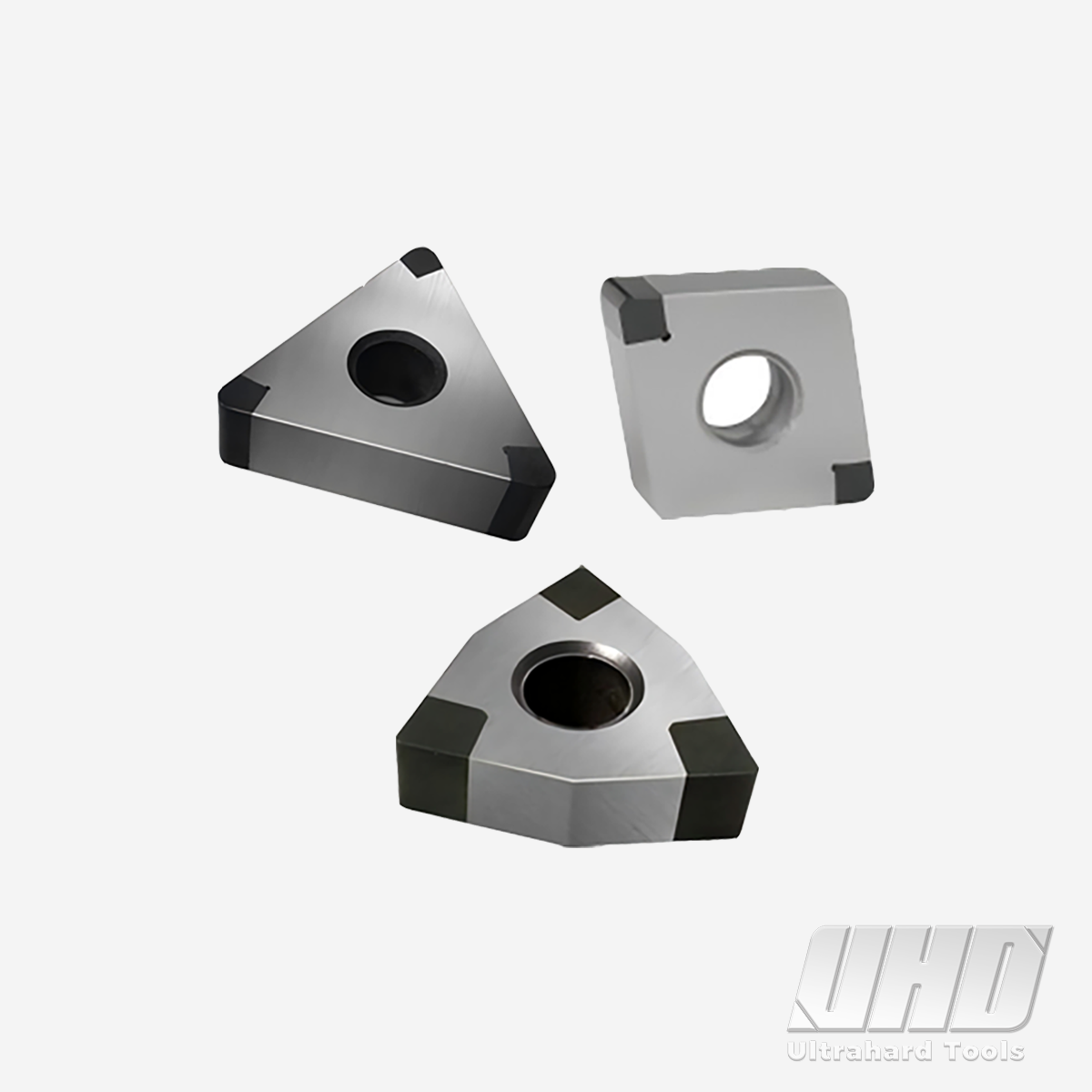
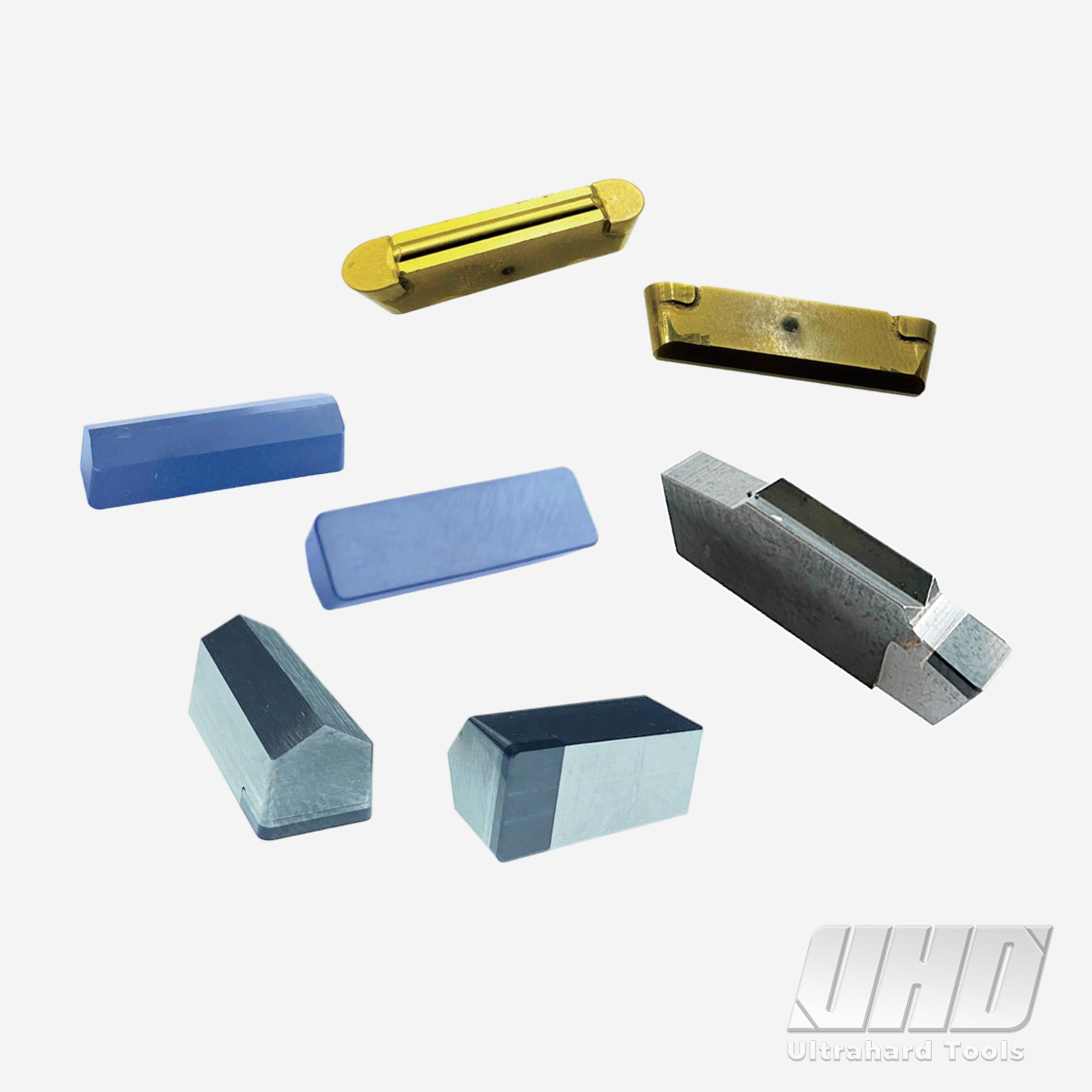
Teeth, keyways and other interrupted areas | Interrupted cutting; non-uniform material | Integral Brazed CBN Insert Series → USN100 | 80–140 | 0.08–0.15 | 0.2–0.6 | Improved impact resistance for porous zones and hard spots. |
| Iron-based powder metallurgy HRC35–50 as-sintered; HRC55+ heat-treated |
Annular grooves and sealing grooves | Precision grooving and profiling | CBN Grooving Insert Series | 70–130 | 0.06–0.12 | One-pass forming to groove width | Balanced wear and impact resistance for continuous and light interrupted grooving. |
The values above are recommended starting windows for initial trials. Final production parameters should be confirmed according to machine rigidity, clamping, coolant delivery, stock allowance and required surface finish.
Selection Logic by Machining Condition
Continuous finishing
Use UHD Coated CBN Insert UPN202 for external diameters, faces and shoulders where abrasive wear and thermal load are the primary concerns. Start from the middle of the recommended parameter window and prioritize stable surface finish.
Interrupted or non-uniform cutting
UHD Integral Brazed CBN Insert Series USN100 is intended for tooth profiles, keyways and impact-prone transitions. Avoid increasing cutting speed solely for productivity; reduce impact risk first and check entry conditions, edge preparation and workholding.
Precision grooving and profiling
Select the UHD CBN Grooving Insert Series for sealing grooves, retaining-ring grooves and one-pass groove forming. Control tool overhang, clamping and coolant direction to reduce chip congestion, groove-wall damage and profile variation.
Process Introduction and Standardization
- Classify the operation: separate continuous finishing, interrupted cutting and grooving/profiling rather than applying one insert type to all features.
- Begin with a controlled parameter window: use the recommended Vc, feed and depth of cut as a first-trial baseline, then adjust one variable at a time.
- Monitor failure modes: abrasive wear and thermal wear indicate a need to review speed and cutting load; chipping or notch wear requires attention to impact, rigidity and cutting entry.
- Set preventive tool-change criteria: record insert series, parameters, dimensional trend and surface condition in the process sheet to support consistent operation across shifts and production lines.
Expected Process Benefits and Application Limits
Matching CBN insert construction to the cutting condition helps make tool wear more predictable, reduce unexpected edge failure, and support more consistent dimensional and surface-quality control in automated or high-volume powder metallurgy machining.
This guidance is focused on iron-based powder metallurgy turning, interrupted cutting and grooving. For substantially different material systems, hardness ranges, interrupted severity or machine conditions, UHD recommends reassessing the insert geometry and starting parameters before production release.
Get Technical Solution
Tell us your workpiece, quantity, and tooling requirement. Our team will reply with a practical solution.