



CBN Insert Selection for HRC60–65 Tool Steel: Stable Roughing and Finish Turning
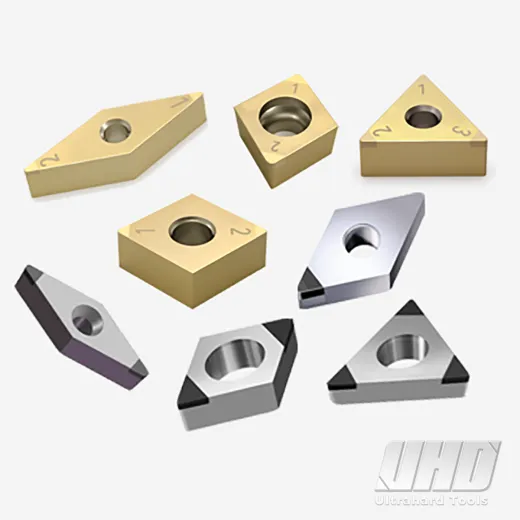
UHD provides a CBN insert selection approach for turning HRC60–65 tool steels, including 9SiCr, CrWMn and W6Mo5Cr4V2-HSS. Use USN650 for heavy roughing and interrupted cutting, and UBN S4 for stable high-finish machining of tap blanks, dies and mold cavities.
Turning hardened tool steels such as 9SiCr, CrWMn, and W6Mo5Cr4V2-HSS (HRC60–65) requires different insert priorities at each stage. Tap and die blanks, cold stamping dies, and mold cavities may combine large stock removal, oxide scale, interrupted cuts, and demanding finish requirements.
For heavy roughing, the primary risk is edge chipping caused by impact and uneven surfaces. For finish turning, edge consistency, controlled wear, and surface stability become more important. UHD therefore recommends a process-based route rather than using one CBN insert throughout the complete operation.
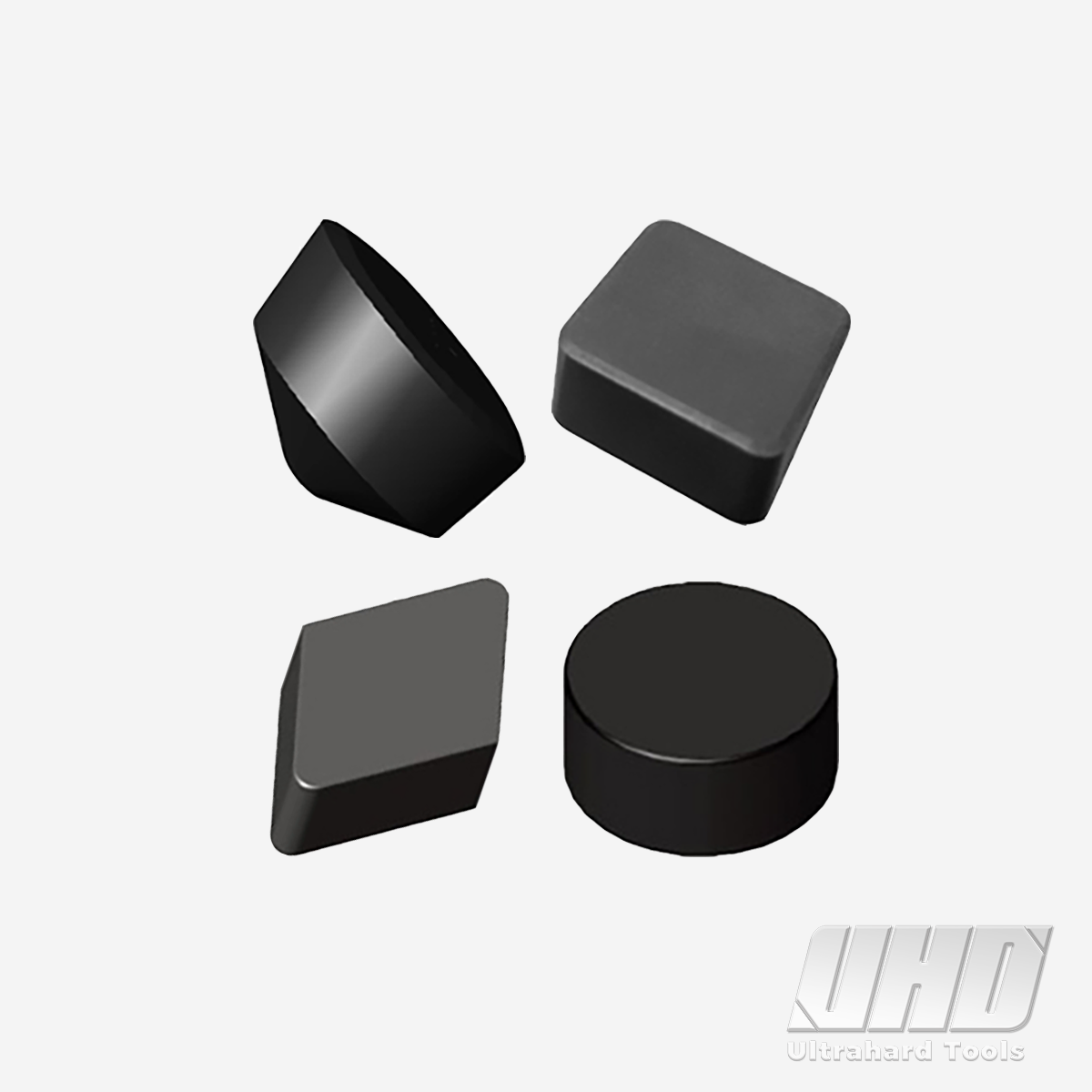
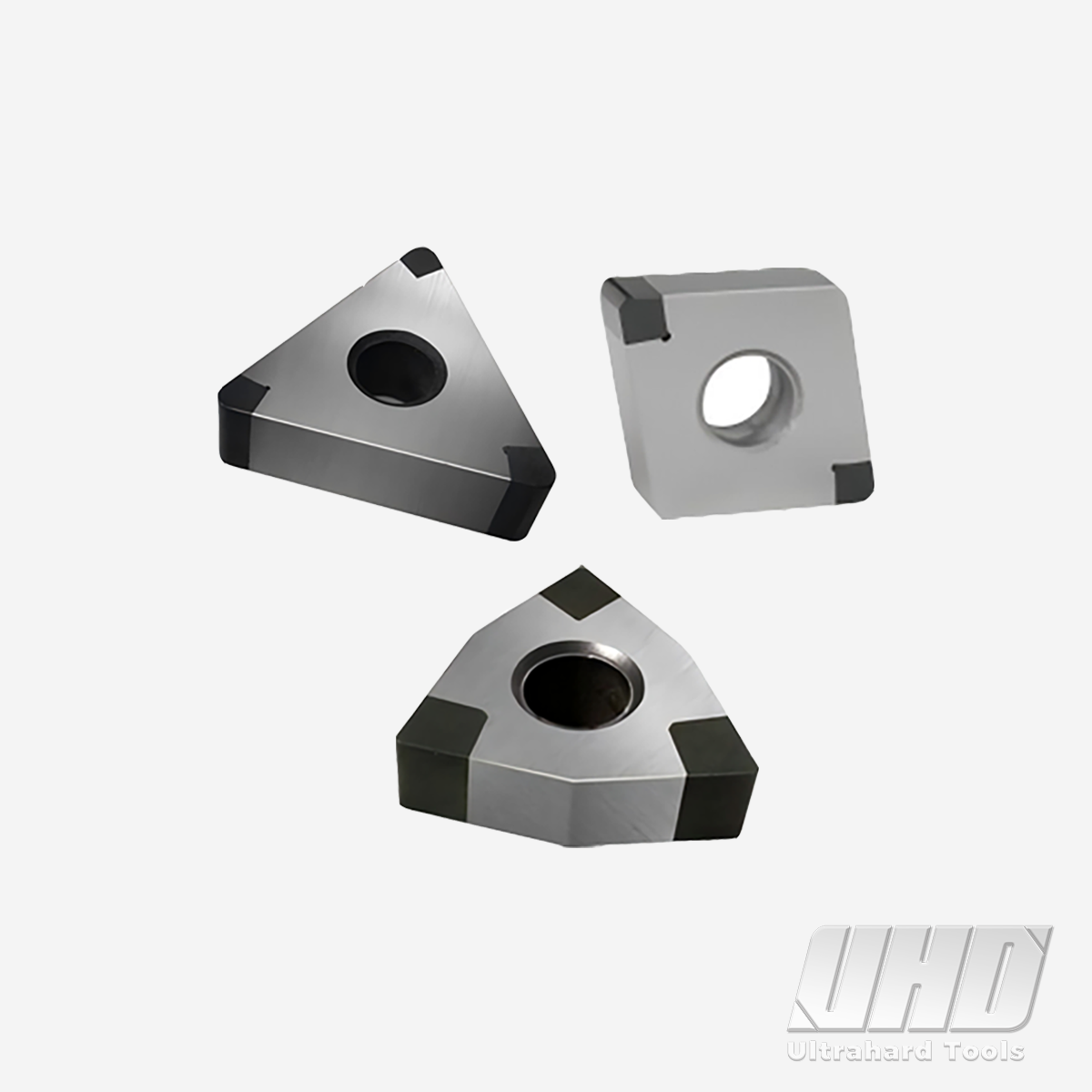
Selection rule: use USN650 from the Integral Brazed CBN Insert Series for large allowances and interrupted cutting; use UBN S4 from the Solid CBN Insert Series for high-finish, dimension-sensitive operations.

Tool Steel HRC60–65 CBN Insert Selection
| Workpiece Material (Hardness) | Typical Parts | Cutting Condition | Recommended Insert Series | Vc (m/min) | f (mm/rev) | ap (mm) |
|---|---|---|---|---|---|---|
| Tool steel (9SiCr, CrWMn, W6Mo5Cr4V2-HSS, HRC60–65) | Tap blanks, die blanks, cold stamping dies | Roughing, large allowance | Integral Brazed CBN Insert Series → USN650 | 50–90 | 0.10–0.25 | 0.3–1.5 |
| Tool steel (9SiCr, CrWMn, W6Mo5Cr4V2-HSS, HRC60–65) | Mold cavities, precision tools | Finish machining, high surface finish | Solid CBN Insert Series → UBN S4 | 70–120 | 0.03–0.08 | 0.05–0.15 |
Practical Introduction Logic
- Identify the impact level first. Interrupted surfaces, oxide scale, hard spots, or large stock removal indicate USN650 as the starting option.
- Separate roughing from finishing. Leave a uniform finishing allowance after roughing, so UBN S4 is not exposed to residual steps or local impact.
- Start conservatively and adjust in small increments. For roughing, confirm edge stability before increasing feed or depth of cut. For finishing, prioritize stable feed, shallow depth, and surface observation.
Application Notes
Results depend on machine rigidity, clamping, tool overhang, allowance consistency, and the degree of interruption. When chipping occurs, check rigidity and impact sources before simply reducing cutting speed. When finish quality varies, inspect insert edge condition, vibration, and stock uniformity.
UHD can support application evaluation using the workpiece grade and hardness, drawing requirements, current parameters, machine and holder details, and photos of wear or surface defects. This route is intended for hard turning of HRC60–65 tool steels; other materials or unstable setups require separate tool-path assessment.
Get Technical Solution
Tell us your workpiece, quantity, and tooling requirement. Our team will reply with a practical solution.