



CBN Insert Selection and Parameters for HRC55–70 Surface-Hardened Alloy Hard Turning
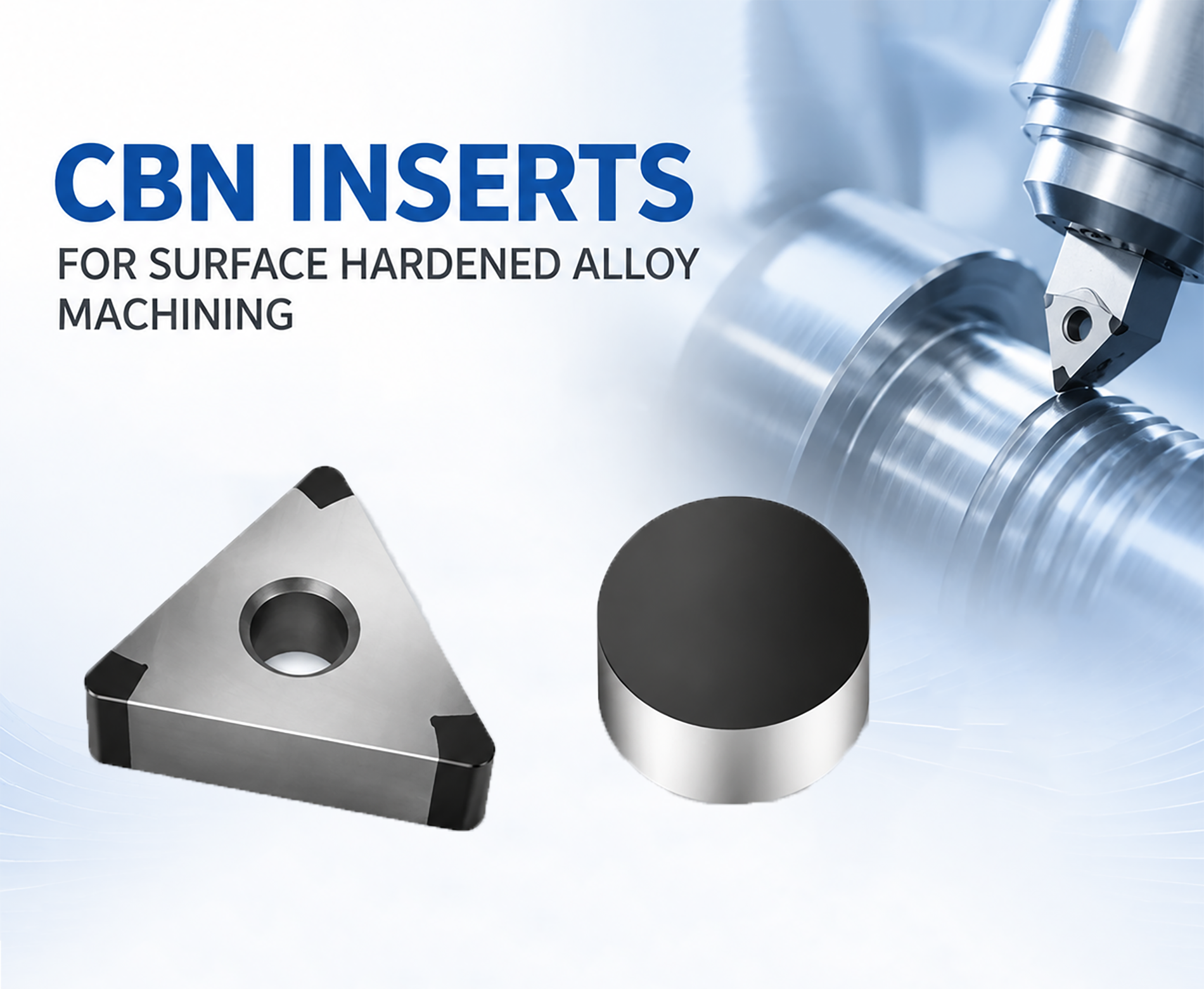
UHD provides CBN insert selection and cutting parameter guidance for hard turning Stellite, nickel-based, and iron-based overlay alloys at HRC55–70. Use USN100 brazed CBN inserts for roughing under interrupted, defect-prone conditions and BN91 full-face CBN inserts for stable continuous finishing, supporting more controlled tool life, cycle planning, and machining processes.
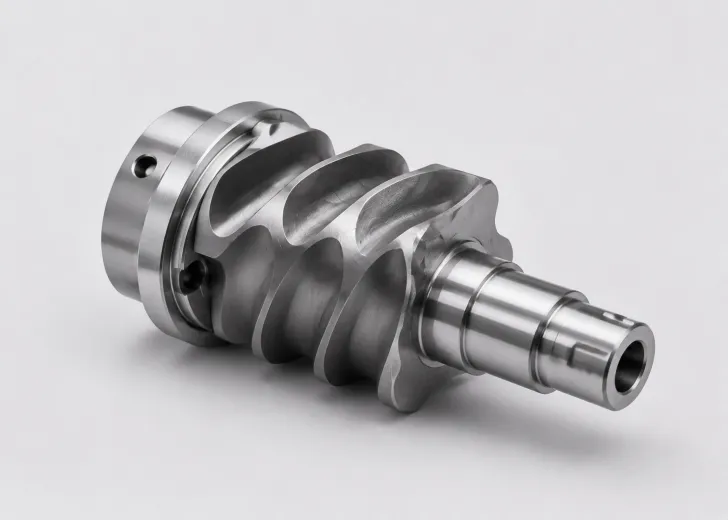
Hard turning of Stellite, nickel-based, and iron-based overlay alloys at HRC55–70 is common in rebuilt rolls, valve sealing faces, screws, and wear components. Although these materials can be machined with CBN, stable production is challenged by hardness gradients, pores, slag inclusions, unmelted areas, and intermittent impact.
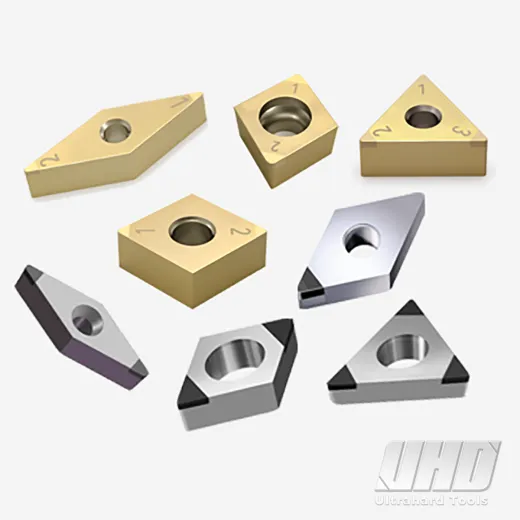
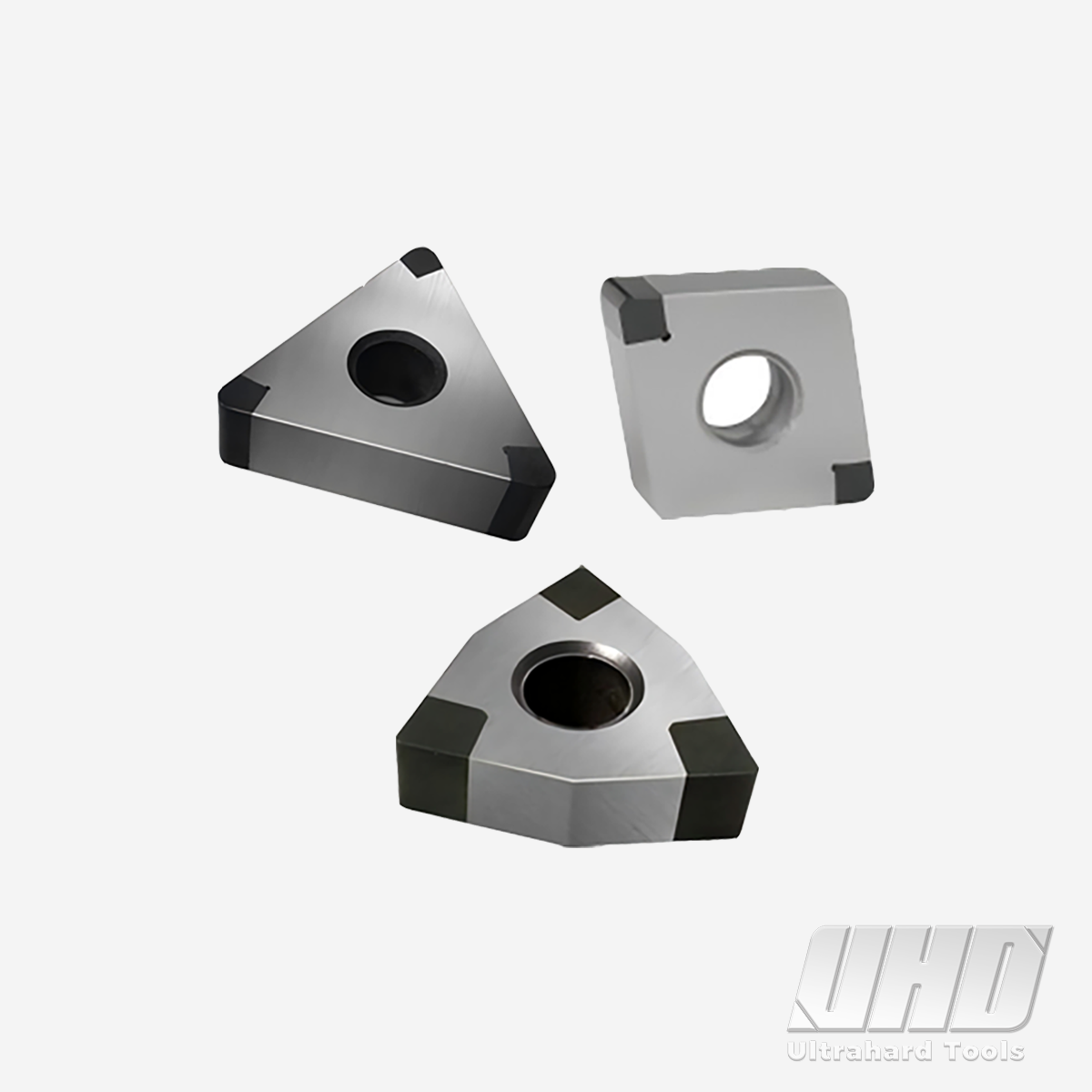
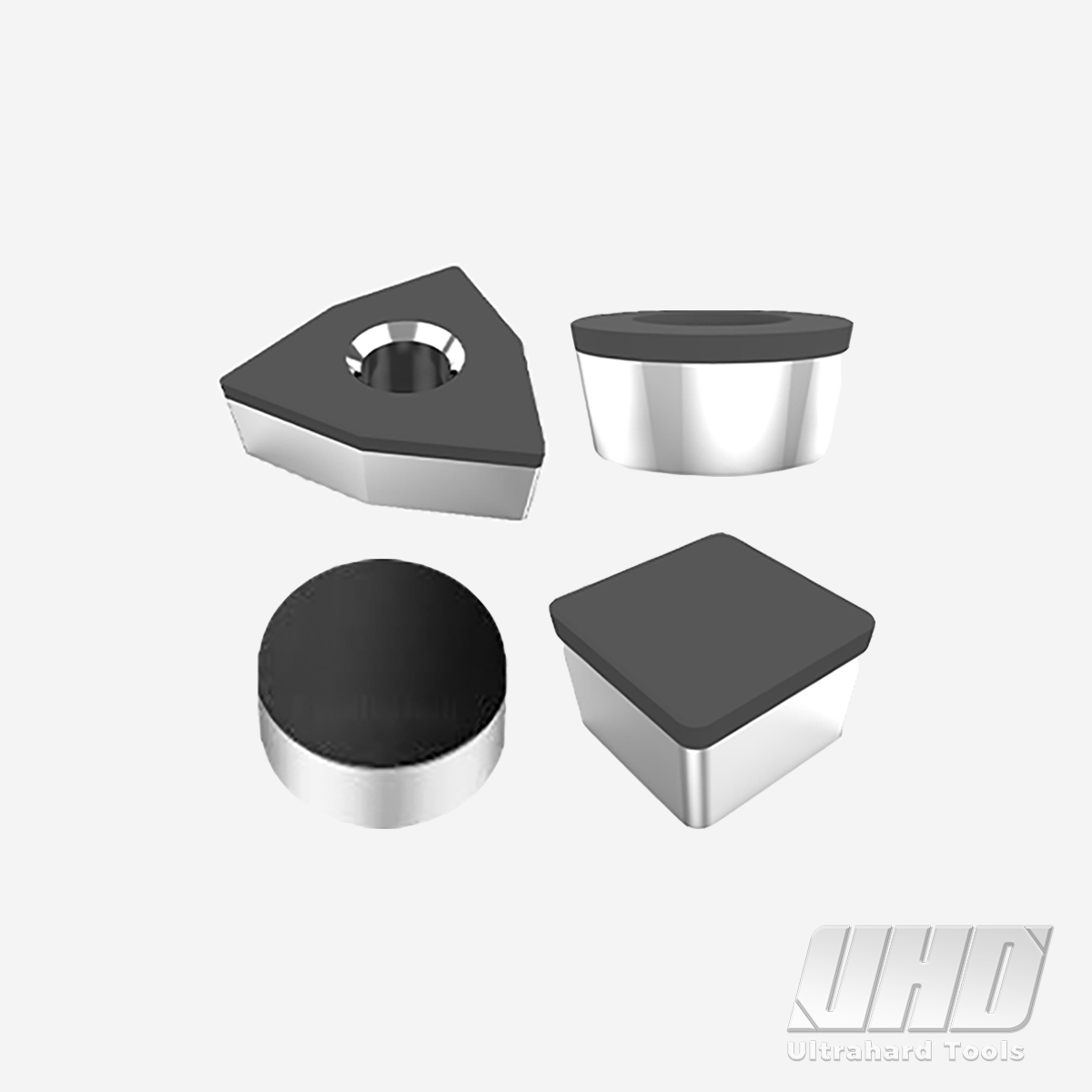
The practical selection principle is to match insert structure to the operation: UHD USN100 Integral Brazed CBN Insert Series for roughing and defect-prone interrupted cuts; UHD BN91 Full Face CBN Insert Series for continuous finishing where predictable tool life, dimensional consistency, and cycle control are priorities.
Recommended starting values should be verified against machine rigidity, workholding, runout, overlay thickness, stock allowance, and cutting continuity before production release.
CBN Insert Selection and Starting Parameter Window
| Material Hardness | Typical Workpiece | Cutting Condition | Recommended Insert Series | Vc (m/min) | f (mm/r) | ap (mm) |
|---|---|---|---|---|---|---|
| Surface-hardened alloys (Stellite / nickel-based / iron-based overlays, HRC55–70) | Rebuilt rolls, valve sealing faces | Roughing; pores and slag inclusions are common | UHD Integral Brazed CBN Insert Series (USN100) | 40–80 | 0.10–0.25 | 0.5–2.0 |
| Surface-hardened alloys (Stellite / nickel-based / iron-based overlays, HRC55–70) | Screw surfaces, wear plates | Finishing; continuous cutting | UHD Full Face CBN Insert Series (BN91) | 60–120 | 0.05–0.20 | 0.1–0.5 |
When to Use USN100
Choose USN100 for roughing, larger stock removal, interrupted cuts, weld-bead steps, or overlays with visible porosity and inclusions. Its role is to manage impact-related chipping risk before the finishing operation.
When to Use BN91
Choose BN91 for stable, continuous finishing cuts with controlled stock allowance. The objective is consistent wear progression, predictable insert changes, and stable size and surface quality.
A Practical Introduction Process
- Confirm the condition: identify overlay system, hardness range, thickness, defect level, and whether the cut is continuous or interrupted.
- Separate roughing and finishing: use USN100 to remove unstable allowance first, then use BN91 to establish final dimensions and surface requirements.
- Start conservatively: begin near the lower end of the parameter window and increase speed or feed only after verifying stable wear and acceptable vibration.
- Standardize replacement criteria: record machining time or parts per edge, wear pattern, size trend, and abnormal failures to define a repeatable tool-change point.
Process Considerations
This guidance applies specifically to hard turning of HRC55–70 surface-hardened overlay alloys. Performance depends strongly on machine and fixture rigidity, workpiece runout, allowance uniformity, and cutting interruption. For applications such as austenitic stainless steel, soft steel, or non-ferrous materials, a different cutting material and edge strategy should be selected. UHD can support selection of USN100 or BN91 based on the actual machining condition and trial-cut feedback.
Get Technical Solution
Tell us your workpiece, quantity, and tooling requirement. Our team will reply with a practical solution.