



CBN Insert Selection for HRC50–65 Chilled Cast Iron Roll and Camshaft Machining
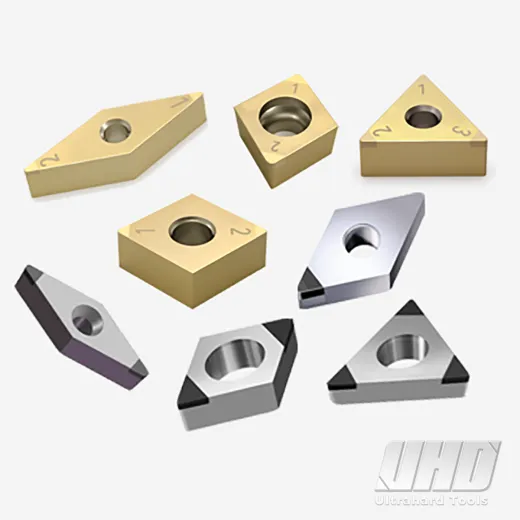
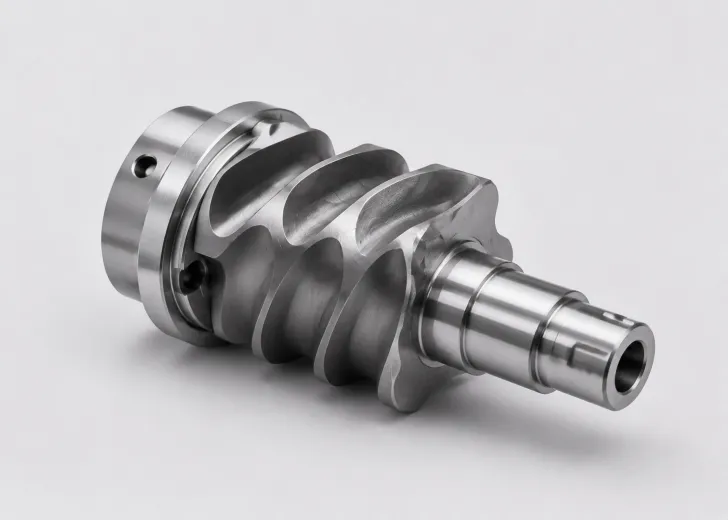
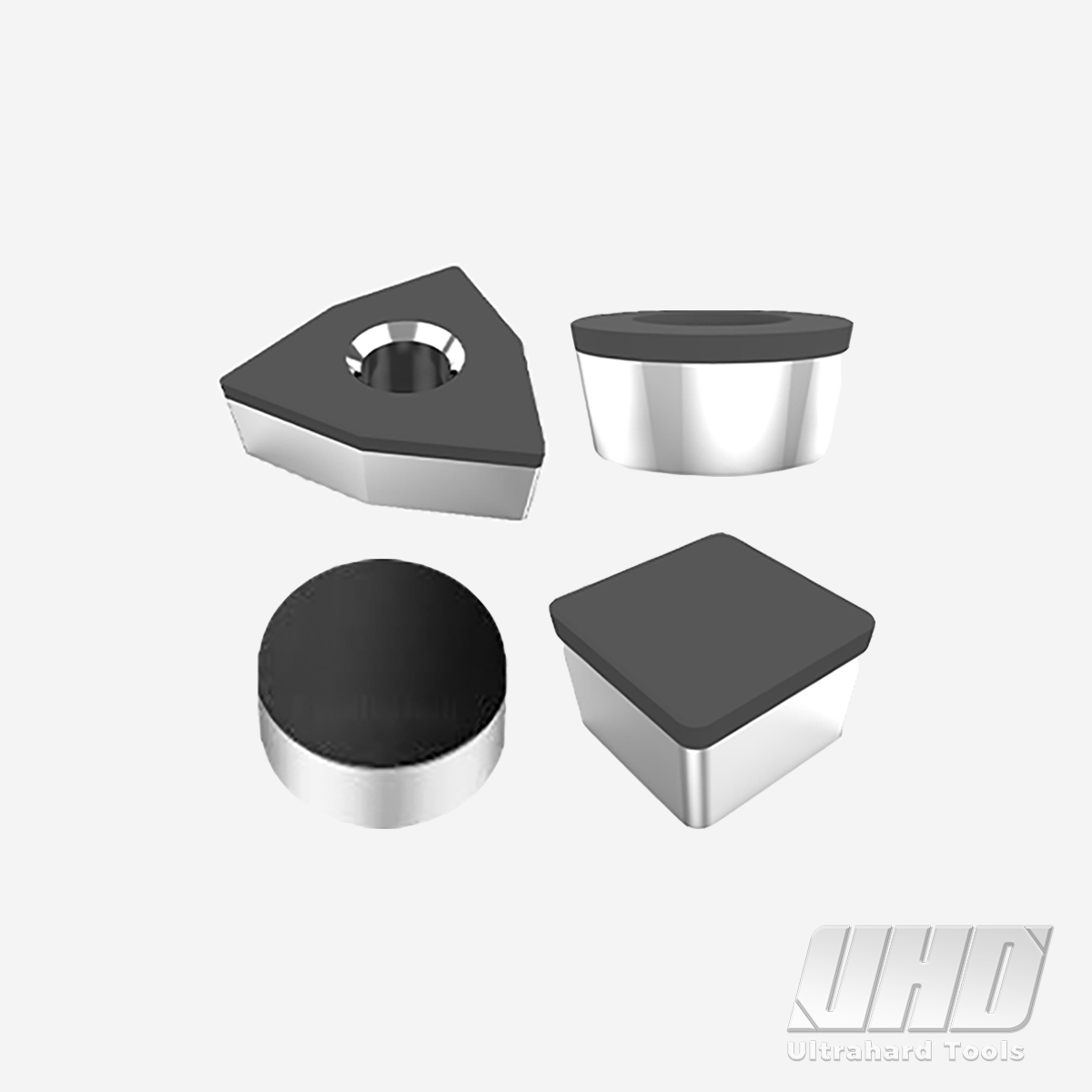
UHD provides CBN insert selection for HRC50–65 chilled cast iron roll, camshaft, pump housing, and wear-part machining. USN100 brazed CBN inserts support impact-resistant roughing under heavy interrupted cuts, while BN91 full-face CBN inserts help maintain consistent finishing quality in continuous or light-interrupted operations.
Why chilled cast iron requires a process-specific CBN strategy
Chilled cast iron at HRC50–65 combines a hard, brittle surface with potential hard-skin variation, casting defects and interrupted profiles. During roughing, these conditions can cause edge chipping, corner breakage or insert failure. During finishing, even small changes in stock allowance or cutting load can affect tool life, dimensional control and surface consistency.
Rather than using one insert for every operation, UHD recommends an operation-based approach: USN100 for heavy interrupted roughing and BN91 for continuous or light-interrupted semi-finishing and finishing.
CBN insert selection for chilled cast iron machining
| Material Hardness | Typical Workpiece | Operation Condition | Recommended Series + Grade | Vc (m/min) | f (mm/r) | ap (mm) | Selection Rationale |
|---|---|---|---|---|---|---|---|
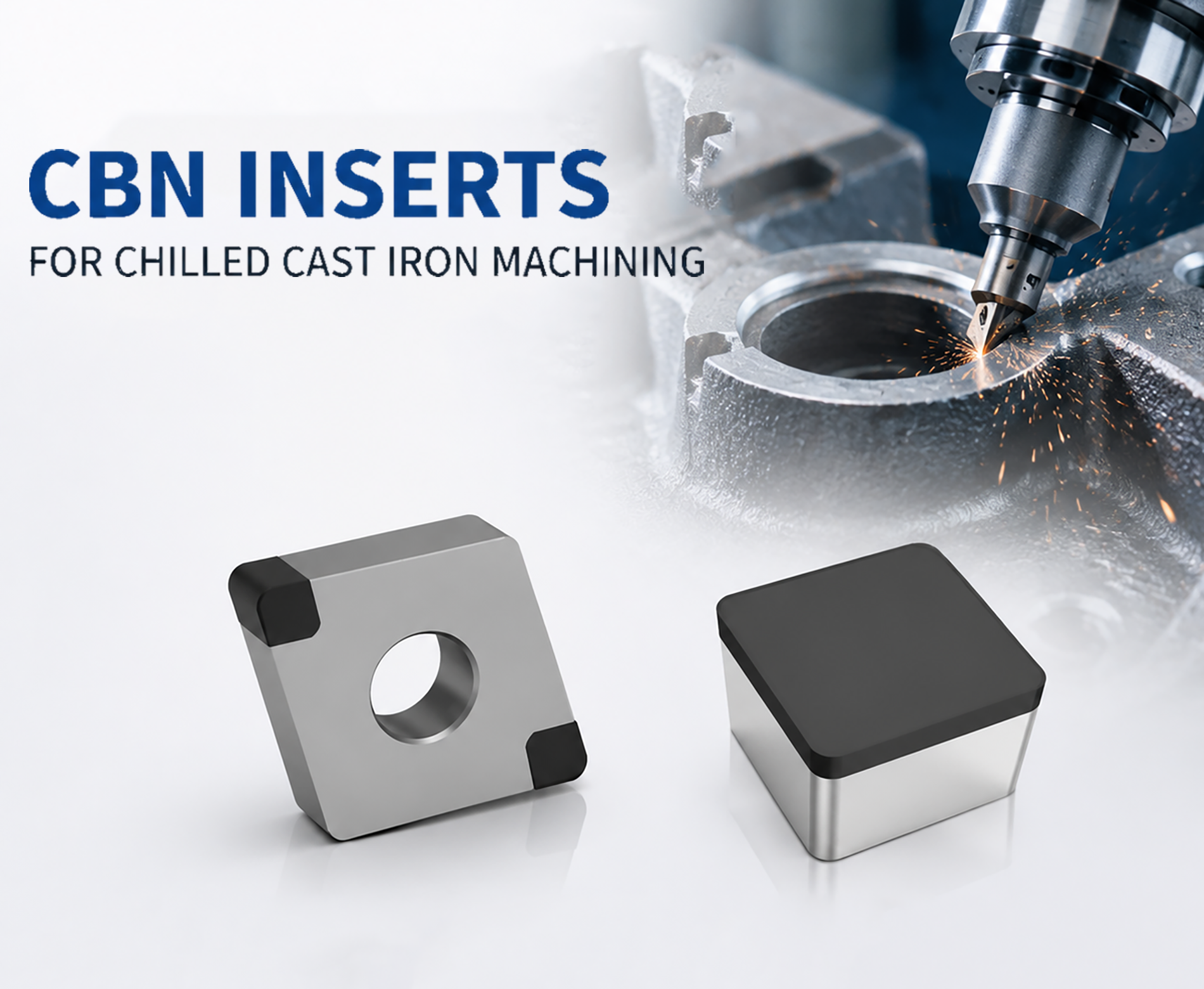
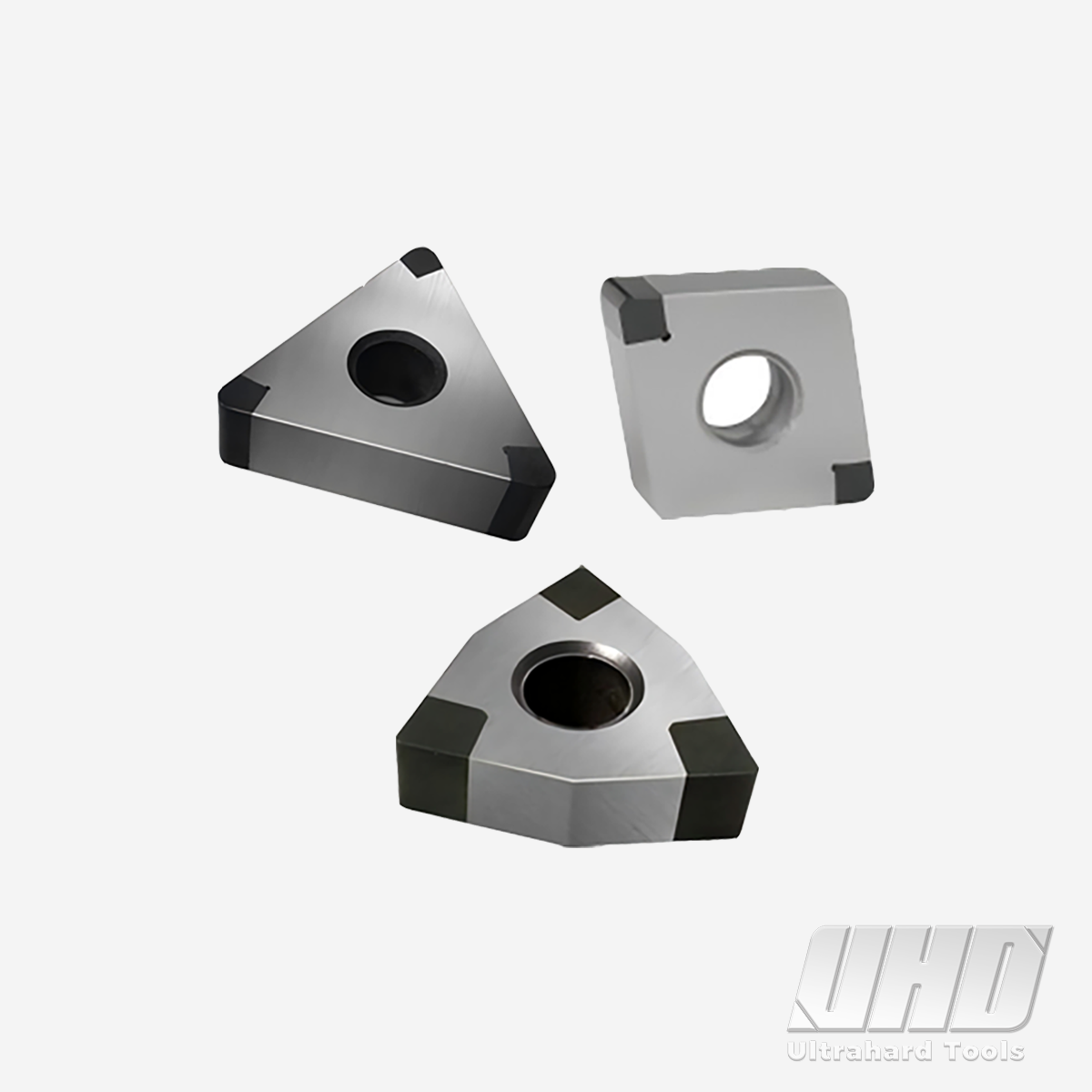
| Chilled cast iron (HRC50–65) | Metallurgical rolls, slurry pump housings, liners | Heavy roughing, severe interrupted cutting | UHD Integral Brazed CBN Insert Series → USN100 | 50–100 | 0.15–0.40 | 0.5–3.0 | High impact resistance for brittle chilled layers and casting-defect impact; prioritizes reduced chipping and breakage-related downtime. |
| Chilled cast iron (HRC50–65) | Finished rolls, impellers, grinding ring walls | Semi-finishing/finishing, continuous or light interrupted cutting | UHD Full Face CBN Insert Series → BN91 | 80–150 | 0.08–0.20 | 0.2–0.8 | A larger full-face CBN area supports wear resistance and consistency in continuous cutting, helping stabilize surface quality for batch finishing and hard turning in place of grinding. |
The parameter ranges are starting windows. Final values should be adjusted according to machine rigidity, clamping, stock allowance, interruption severity and chilled-layer uniformity.
Match the insert to the dominant cutting condition
Heavy interrupted roughing: USN100
Select UHD Integral Brazed CBN Insert Series USN100 where large allowance, interrupted profiles, hard skin, pores or random defects create repeated impact. The priority is maintaining edge integrity before increasing cutting speed.
Continuous finishing: BN91
Select UHD Full Face CBN Insert Series BN91 for continuous or light-interrupted passes where stable surface finish, dimensional repeatability and predictable tool life are the primary requirements.
Practical implementation for stable batch machining
- Document the workpiece condition: confirm hardness range, chilled-layer depth, defect-prone zones, stock allowance and interruption pattern.
- Start with a conservative trial: use USN100 in the lower speed range for roughing; begin BN91 at moderate speed and feed for finishing stability.
- Adjust according to failure mode: for roughing chipping, first reduce impact load through cutting path, depth of cut and feed stability. For finishing variation, stabilize allowance and avoid repeated engagement or dwell marks.
- Standardize the proven process: record insert grade, holder and clamping method, parameter window, wear limit and change criteria for repeatable production across shifts or locations.
Application value and operating boundaries
Using separate roughing and finishing inserts helps reduce unplanned stops caused by roughing-edge damage while improving finishing consistency in roll, camshaft and wear-part production. This process split also provides a clearer basis for remote technical coordination and cross-border tooling introduction.
Important: USN100 is intended for impact-resistant roughing rather than the final high-finish pass. BN91 is intended for continuous or light-interrupted finishing and should not be used as a substitute for a heavy interrupted roughing insert. Where rigidity is limited or workpiece overhang is high, reduce cutting load before increasing speed.
Get Technical Solution
Tell us your workpiece, quantity, and tooling requirement. Our team will reply with a practical solution.