



CBN Insert Selection for HT200, HT250 and HT300 Gray Cast Iron Batch Turning
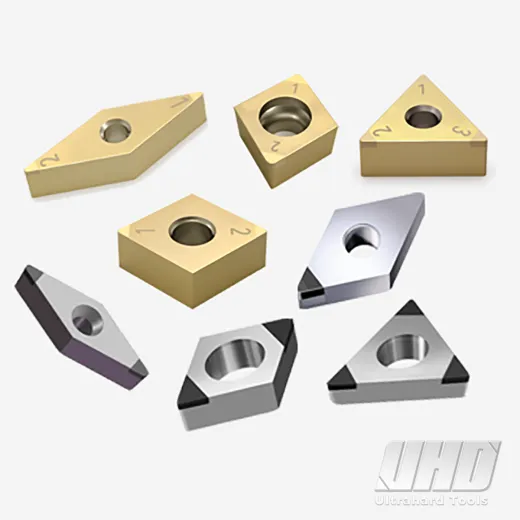
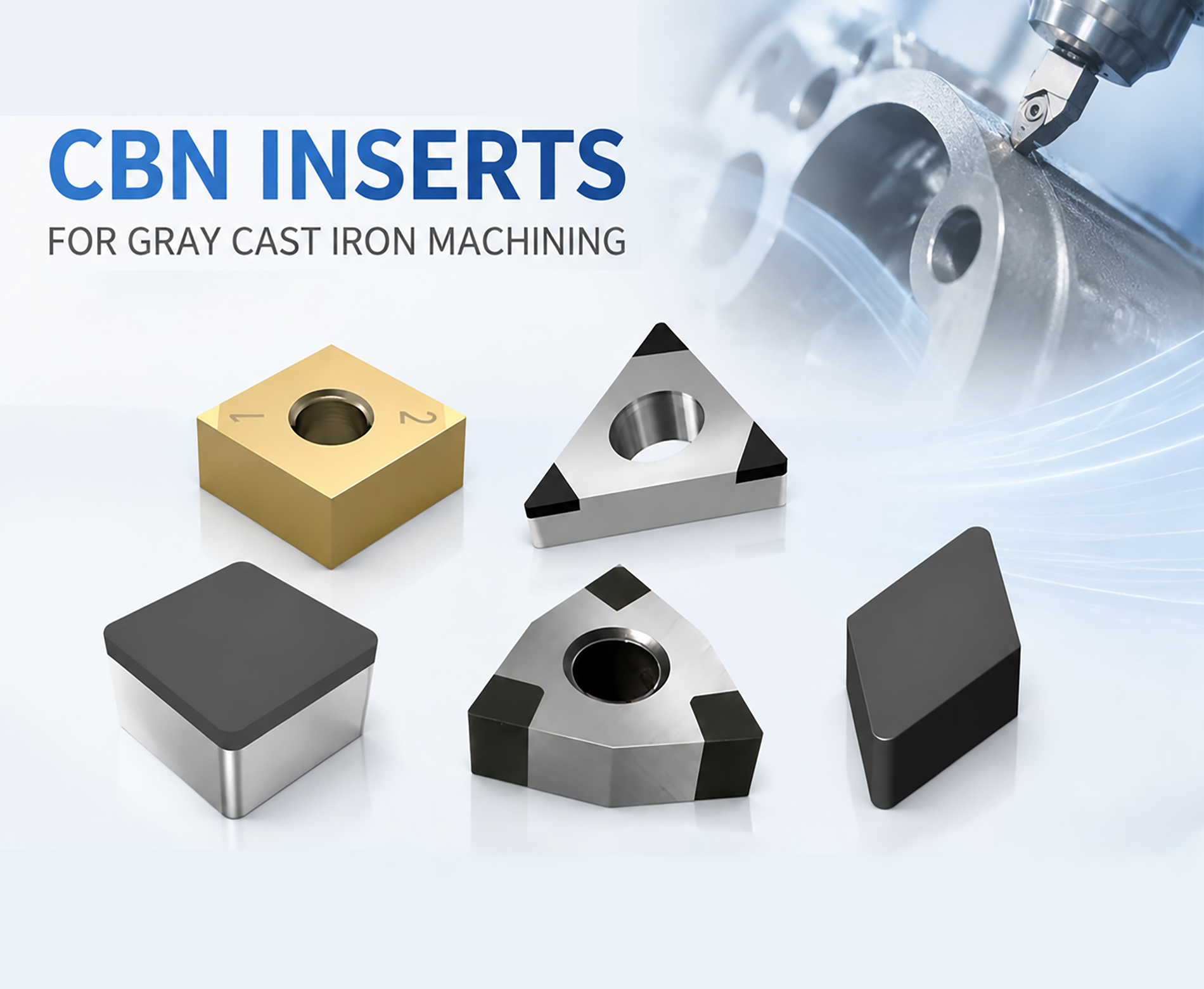
UHD provides a structured CBN insert selection approach for batch turning of HT200, HT250, and HT300 gray cast iron components, including brake discs, flywheels, engine blocks, cylinder heads, and machine tool beds. The solution matches insert structure, grade, and machining parameter windows to continuous finishing, light interrupted cutting, heavy roughing, hard turning, and turn-milling replacement requirements to support consistent tool life, controlled cycle times, and standardized production processes.
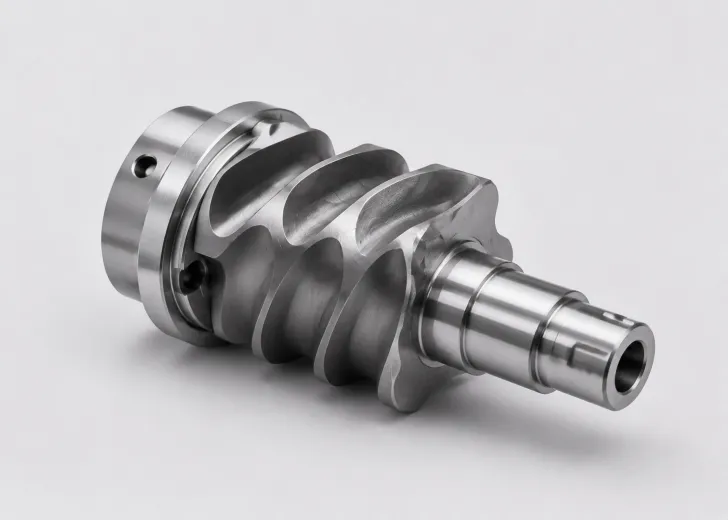
HT200, HT250 and HT300 gray cast iron, typically within HB180–250, are widely used in brake discs, flywheels, engine blocks, cylinder heads and machine tool beds. In batch turning, graphite-related abrasive wear, variable casting skin and changing cutting engagement make insert selection a production-control decision—not simply a grade comparison.
For stable output, the selection sequence should follow material hardness → workpiece feature → cutting condition → insert structure and grade → verified parameter window. UHD applies this logic to match CBN inserts with continuous finishing, light interrupted cutting, heavy roughing, turn-for-grinding replacement and precision boring operations.
The objective is to establish repeatable tool-life behavior, controlled cycle times and standardized changeover criteria for cross-border B2B production introduction.
UHD CBN Insert Selection Table for Gray Cast Iron Turning
The following windows apply to typical HT200/HT250/HT300 applications. Final settings should be validated against machine power, fixture rigidity, tool overhang, coolant strategy and allowance variation.
| Material Hardness | Typical Workpiece | Cutting Condition | Recommended UHD Series + Grade | Vc (m/min) | f (mm/r) | ap (mm) |
|---|---|---|---|---|---|---|
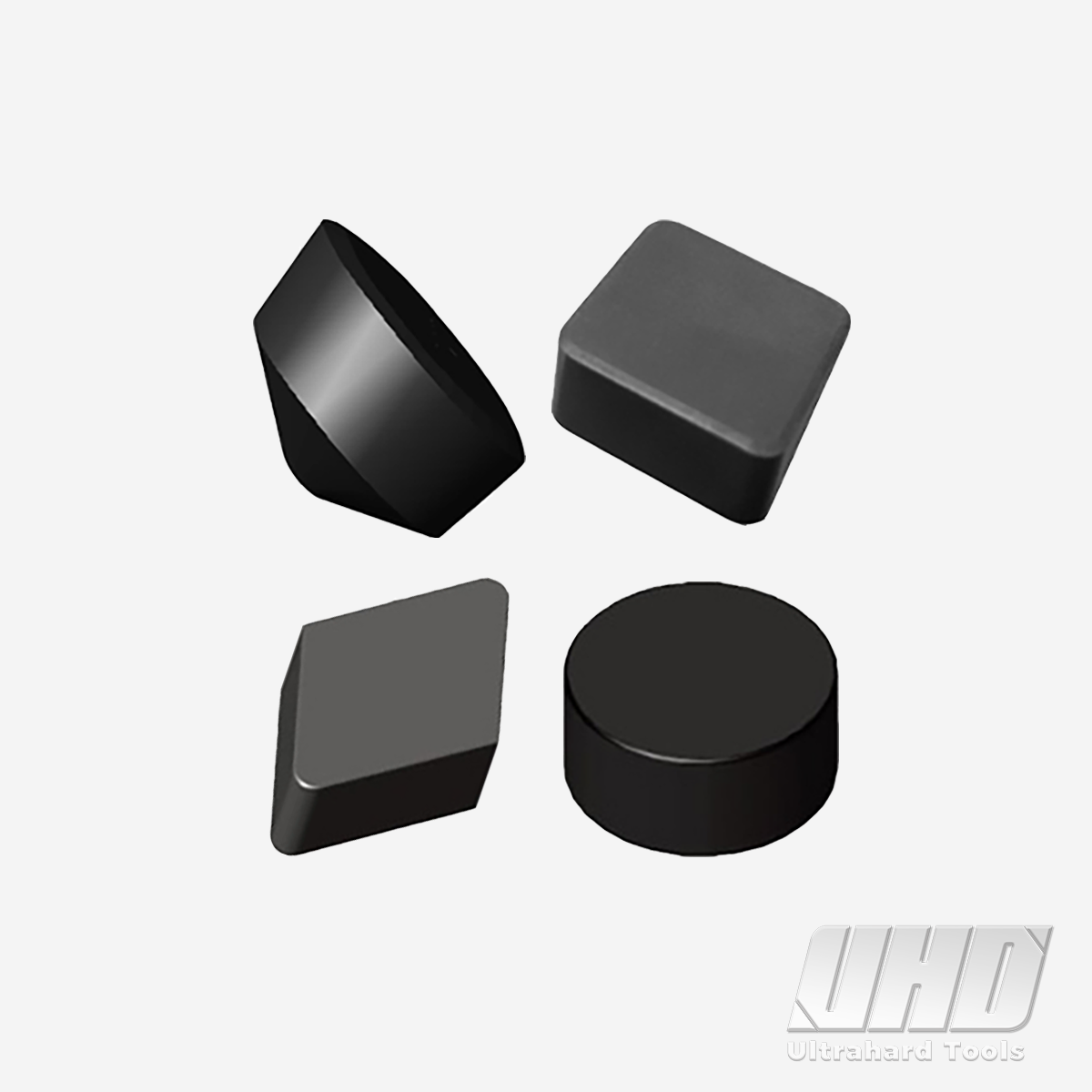
| Gray cast iron (HT200/250/300, HB180–250) | Engine cylinder bores, brake discs, flywheels | High-speed continuous finishing | Solid CBN Insert Series → UBN S2 | 500–1000 | 0.15–0.40 | 0.3–0.5 |
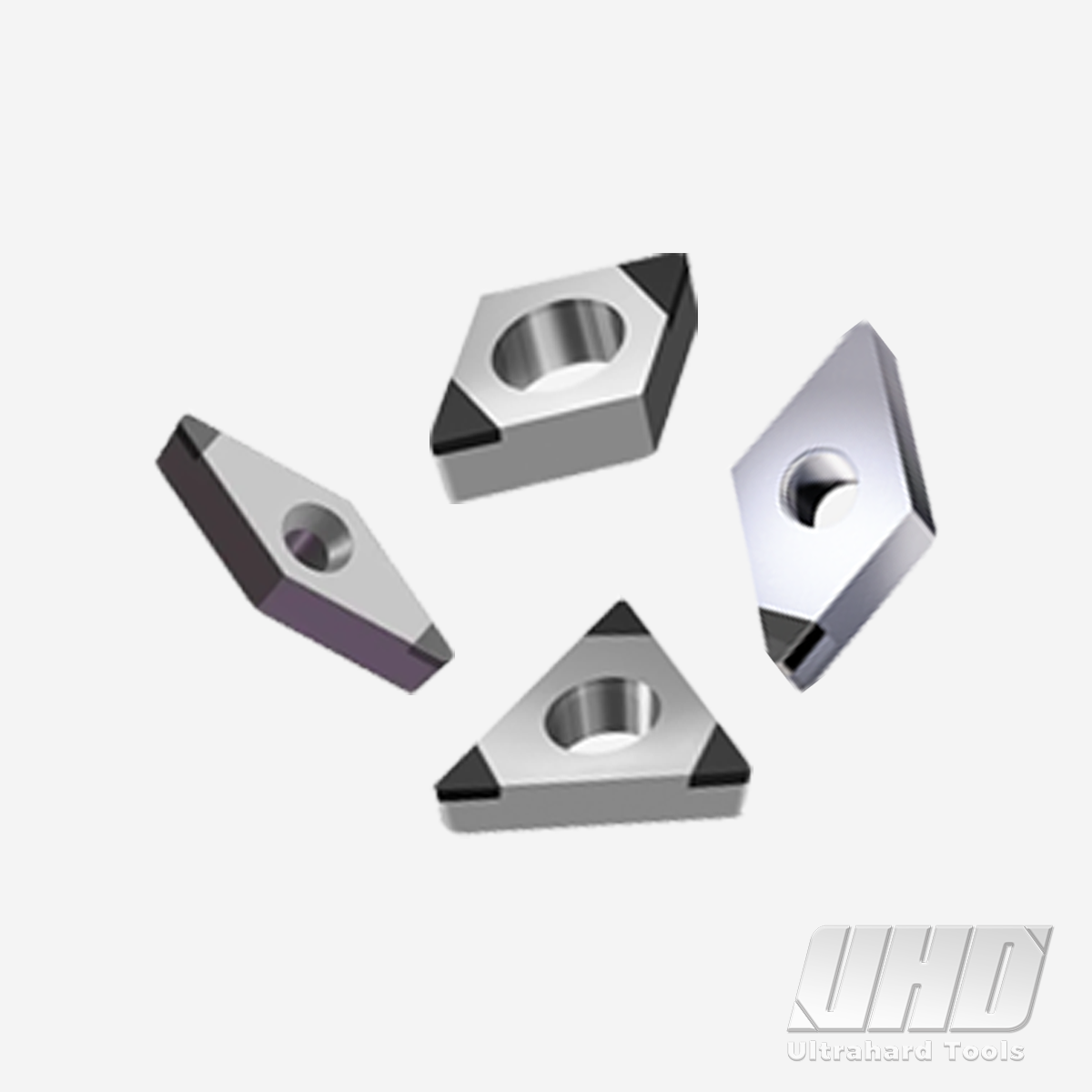
| Gray cast iron (HT200/250/300, HB180–250) | Brake disc OD, general faces | Medium speed, light interrupted cutting | Composite Brazed CBN Insert Series (non-coated) → UPN201 | 300–700 | 0.05–0.50 | 0.05–1.0 |
| Gray cast iron (HT200/250/300, HB180–250) | Machine tool beds, large castings | Roughing, large allowance | Integral Brazed CBN Insert Series → USN100 (double-sided vacuum integral brazing process) | 200–400 | 0.15–0.35 | 0.5–3.0 |
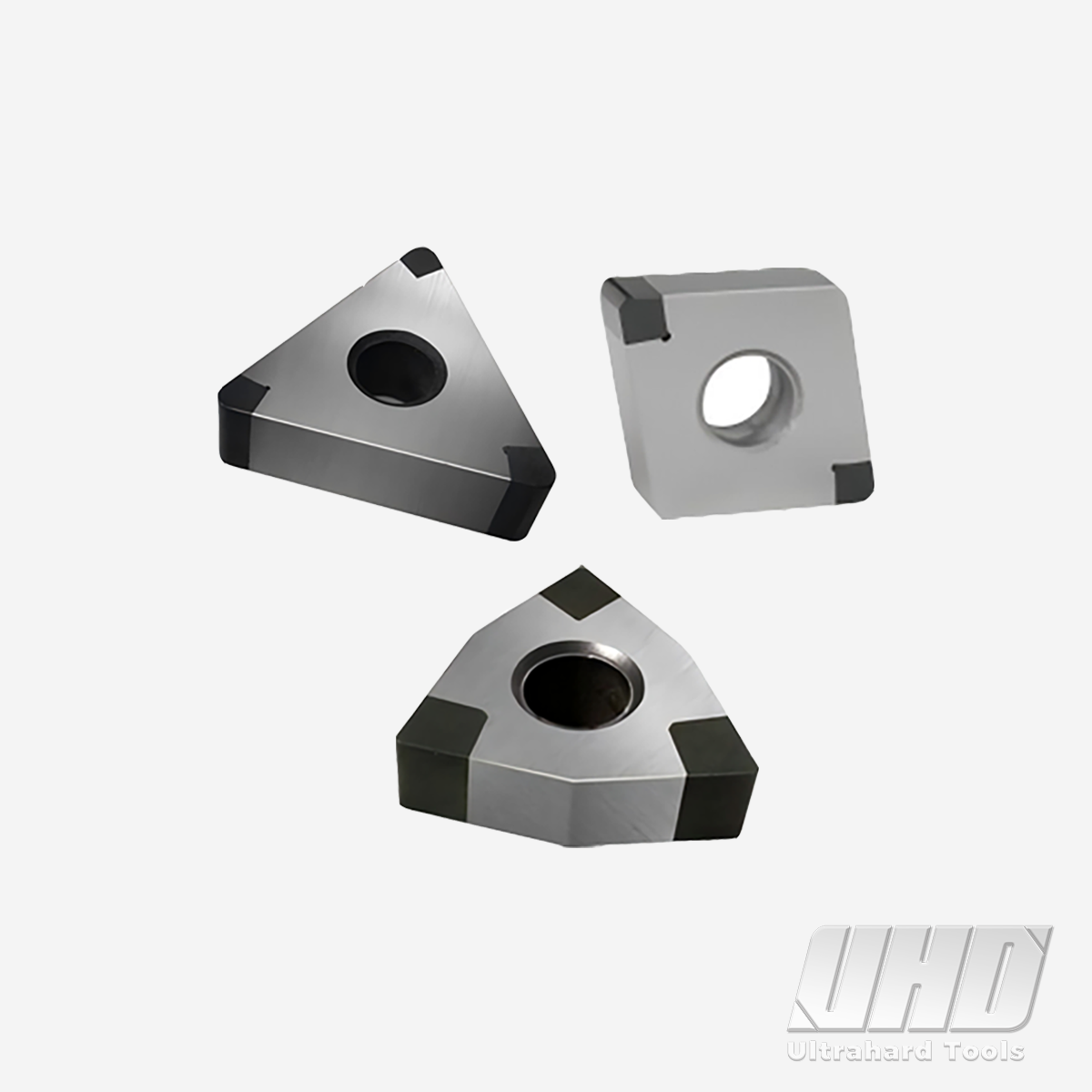
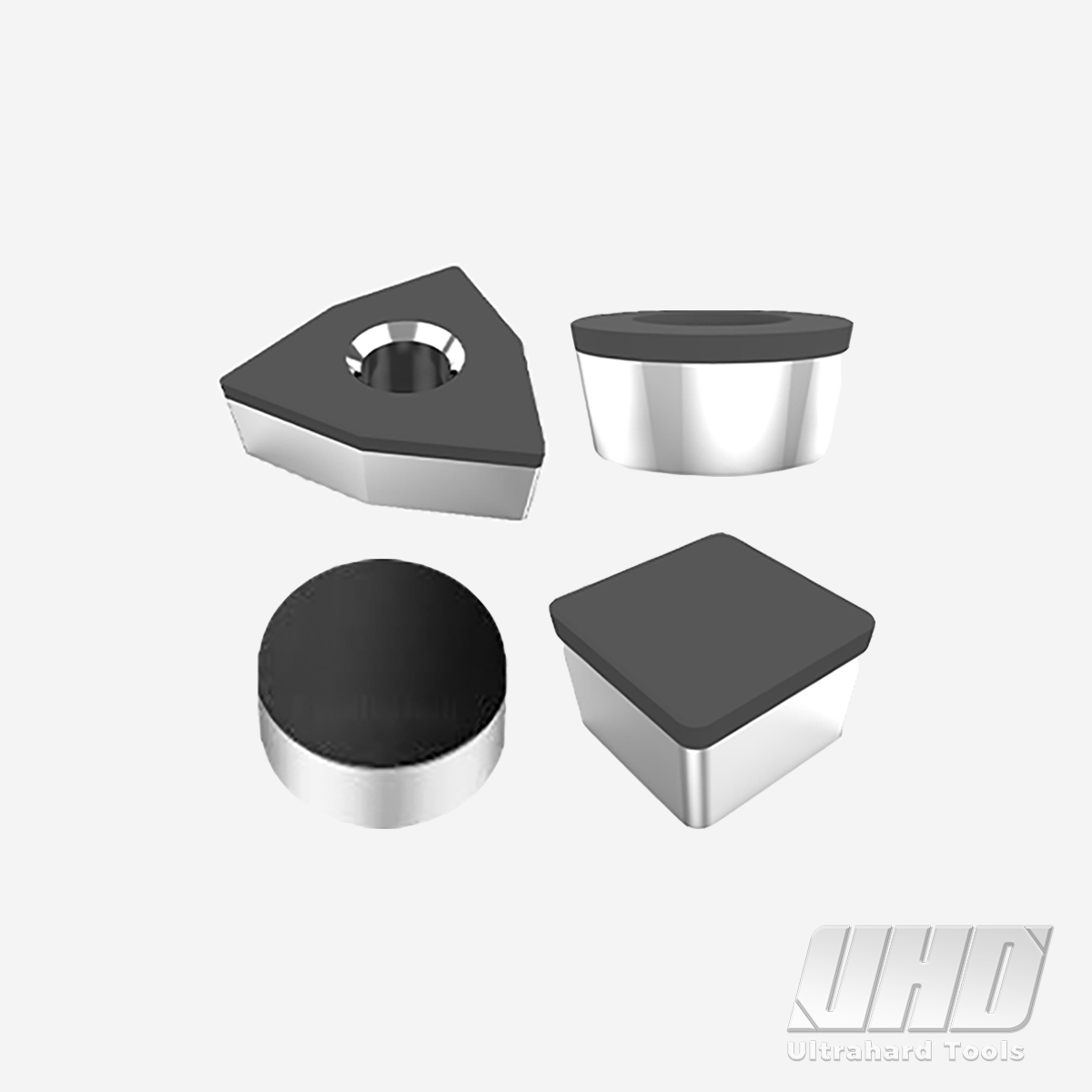
| Gray cast iron (HT200/250/300, HB180–250) | Cylinder block faces, brake disc friction faces | High-speed facing, turn-for-grinding replacement, batch finishing | Full Face CBN Insert Series → BN91 | 550–900 | 0.10–0.25 | 0.2–0.6 |
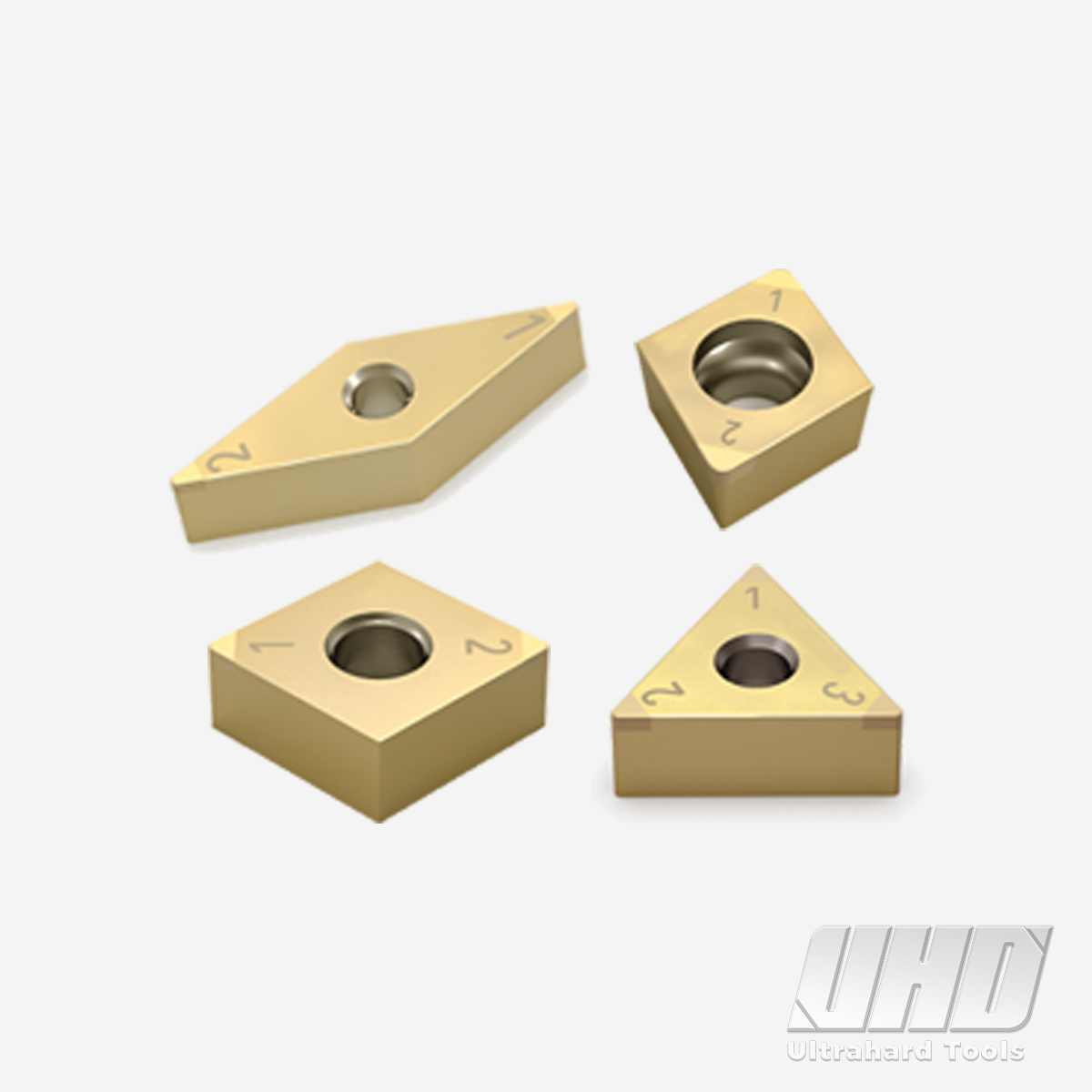
| Gray cast iron (HT200/250/300, HB180–250) | Cylinder head valve-seat and guide holes, precision cylinder bores | High-precision finish boring, low allowance, positional tolerance requirements | Coated CBN Insert → UPN202 | 200–450 | 0.04–0.12 | 0.1–0.4 |
Application Logic for Stable Mass Production
- Continuous finishing: UBN S2 supports high-speed, stable cutting. Establish tool change by parts produced or machining time rather than by maximum wear alone.
- Light interruption: UPN201 is suited to casting skin, holes, grooves and intermittent engagement, where edge toughness and stable load transition are required.
- Heavy roughing: USN100 prioritizes resistance to impact under uneven stock removal. Set a practical depth-of-cut limit based on fixture and machine rigidity.
- Turn-for-grinding replacement: BN91 is intended for face-turning operations where surface finish, waviness and thermal stability need to be verified together.
- Precision small-bore finishing: UPN202 should be evaluated with toolholder runout, overhang and dimensional drift, as these factors strongly affect bore consistency.
From Trial Cutting to a Controlled Production Window
A practical UHD introduction process records the cast iron grade and hardness, stock variation, interruption ratio, machine and clamping conditions, then verifies parameters in sequence: cutting speed → feed → depth of cut. Wear pattern, size trend and surface condition should be reviewed before fixing the insert grade, parameter window, tool-change rule and abnormal-condition response. For heavily interrupted cuts or significant casting defects, additional edge-preparation and impact-resistance validation is required.
Recommended Products
Get Technical Solution
Tell us your workpiece, quantity, and tooling requirement. Our team will reply with a practical solution.