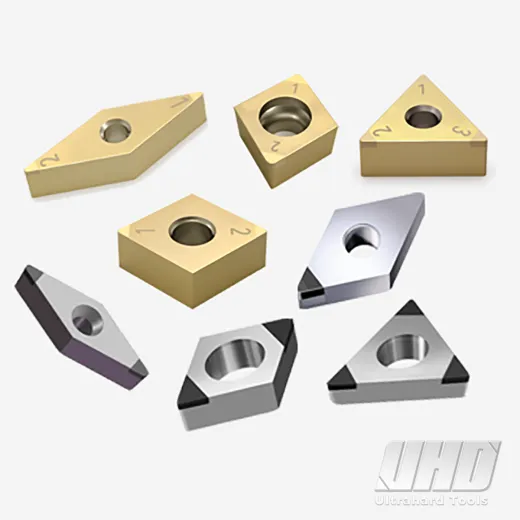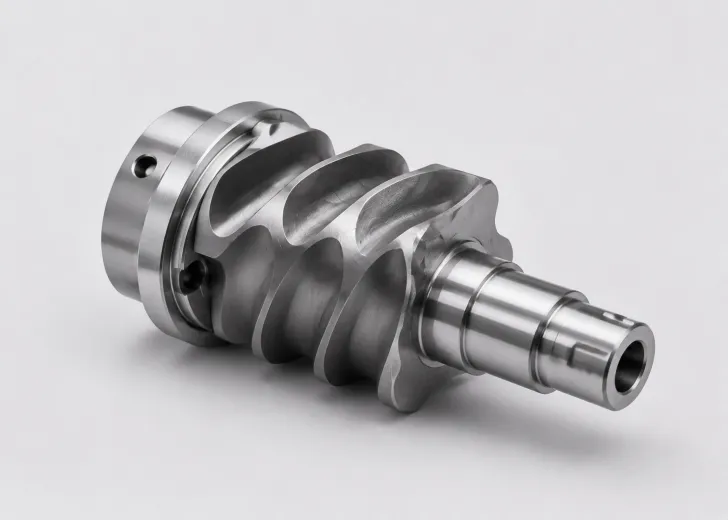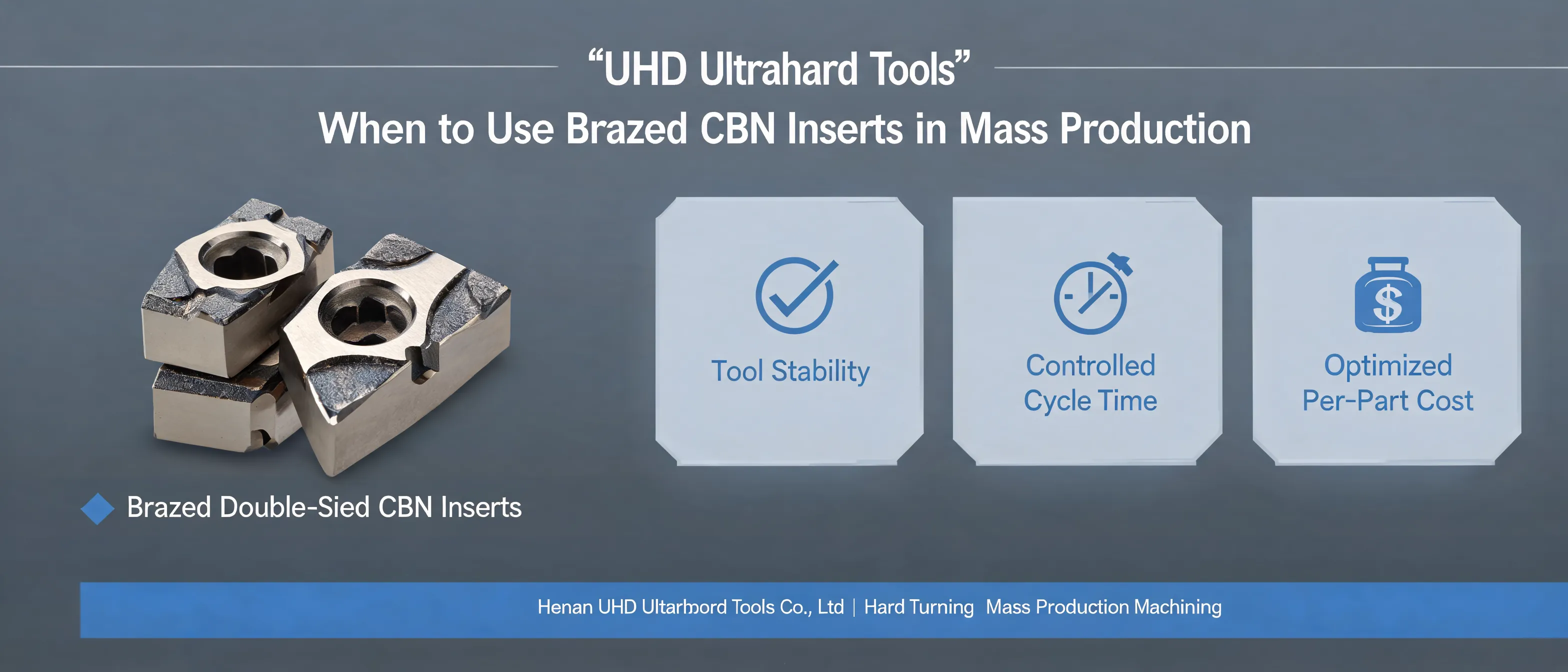
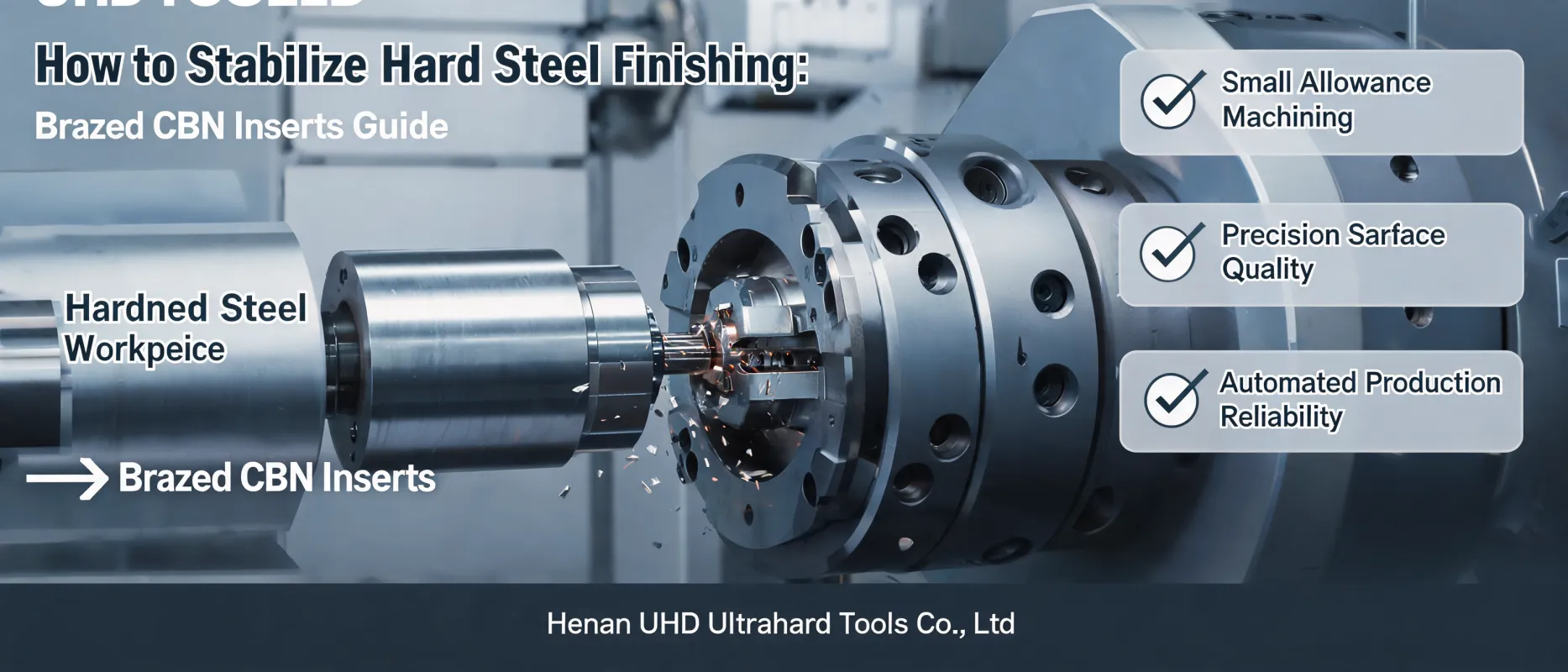
In mass production machining, especially in hard turning applications, tool selection directly impacts process stability, cycle time, and overall cost control. brazed double-sided CBN inserts are not simply an alternative to standard inserts—they are designed for environments where consistency, load resistance, and predictable performance matter more than short-term cutting ability.
Henan UHD Ultrahard Tools Co., Ltd focuses on developing vacuum brazed CBN inserts that help manufacturers reduce insert failure risk, stabilize machining rhythm, and improve per-part economics in demanding production lines.
These inserts are most suitable when machining conditions combine high hardness, high load, and continuous production requirements. Their structure is designed to reduce variability rather than maximize extreme cutting parameters.
Traditional brazed inserts often struggle with inconsistent bonding strength, which leads to insert failure such as edge chipping, layer separation, or sudden breakage. In a mass production environment, even small instability can disrupt the entire process flow.
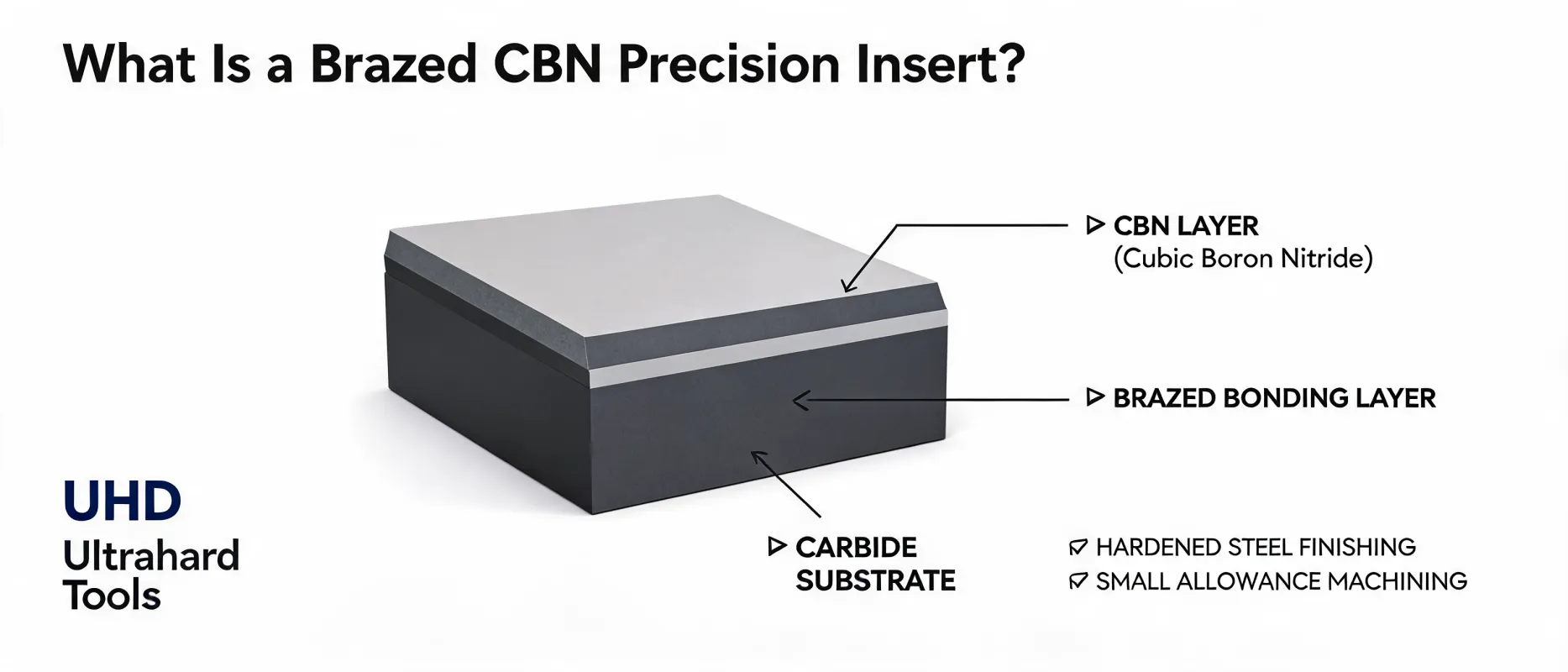
UHD’s double-sided vacuum brazing process creates a more stable metallurgical bond between the CBN layer and carbide substrate, helping reduce unexpected failures and improving long-term consistency across batches.
Stronger bonding reduces risks of insert failure under thermal shock and heavy cutting loads, supporting stable long-run machining.
Reduced variation between inserts helps maintain predictable tool change intervals and consistent production rhythm.
Double-sided usable design increases the number of effective cutting edges per insert, lowering cost per component.
Longer usable life per insert helps reduce downtime and supports uninterrupted production flow.
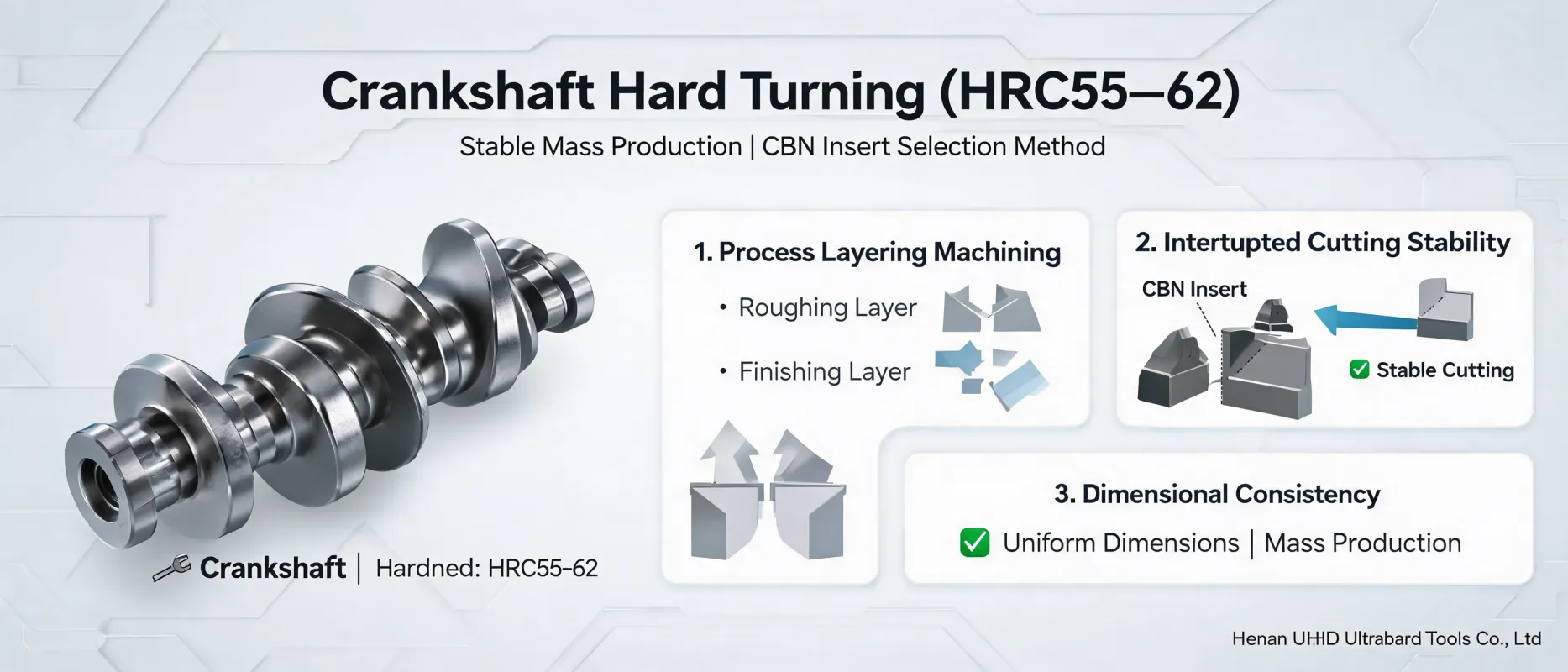
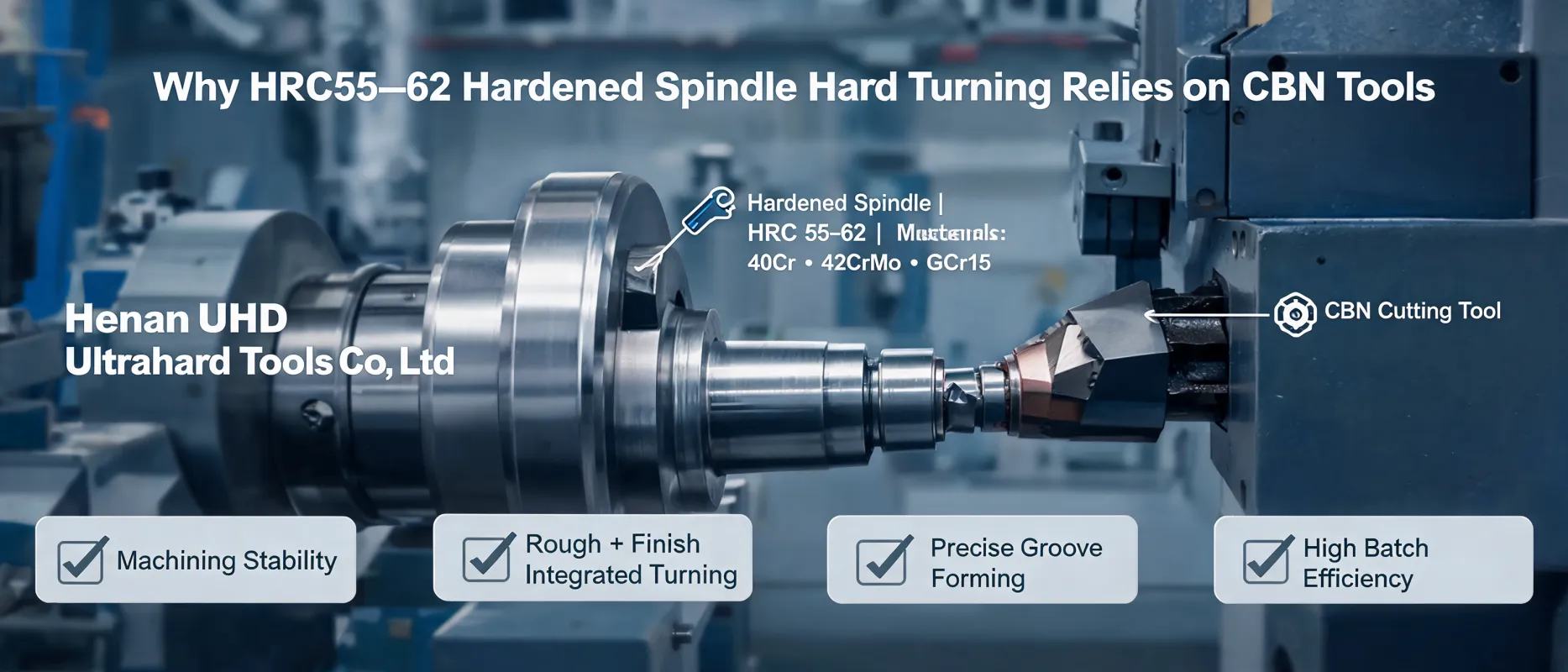
In practice, brazed CBN inserts are widely used in industries where hard turning replaces or complements grinding processes.
While effective in hard turning, these inserts are not universal. Using them outside their intended scope may reduce performance.
Successful use of brazed double-sided CBN inserts depends not only on the tool itself but also on matching cutting parameters, machine rigidity, and workpiece material characteristics. UHD Ultrahard Tools supports customers in aligning insert structure with real production conditions, helping ensure that improvements in tool stability translate into measurable gains in cycle control and cost efficiency.
For manufacturers seeking a balance between tool life consistency, reduced failure risk, and optimized per-part cost, this type of insert provides a practical and scalable solution for modern mass production environments.
Tell us your workpiece, quantity, and tooling requirement. Our team will reply with a practical solution.